In this article
Cost To Build A House In South Carolina (2026)
If you’re trying to pin down one number for the cost to build a house in South Carolina, you’re going to run into the same problem builders and lenders deal with every day: there isn’t a single “South Carolina build cost.” There are hundreds of “correct” prices depending on where you build, what you build, and what your lot requires before a crew can even start framing.
This guide uses current 2026 datapoints (labor, permits, and commodity pricing) to show why costs swing so widely—and why a line-item estimate tied to your specific plan and your specific county/city is the only way to budget confidently.
Free instant estimate · ~30 seconds
Quick Estimator
No sign-upRough planning range based on your inputs and current regional cost indices — not a quote. Your plan, lot, and selections move the number; the full report prices all 60+ items to your exact zip.
✓ Free — no sign-up · ✓ 60+ line items · ✓ ZIP-localized · ✓ Planning figures, not bids
The realistic 2026 cost range (and why it’s a range)
For 2026, many South Carolina builds fall into a broad “all-in construction” range (not including land) of roughly:
- $150–$250+ per square foot (est.) for many standard custom homes with typical finishes
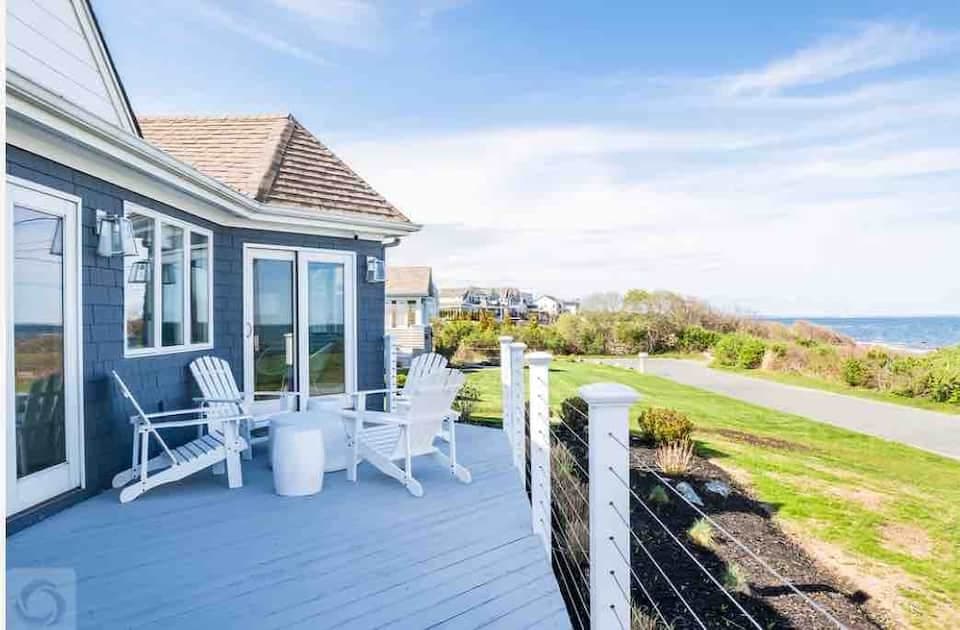
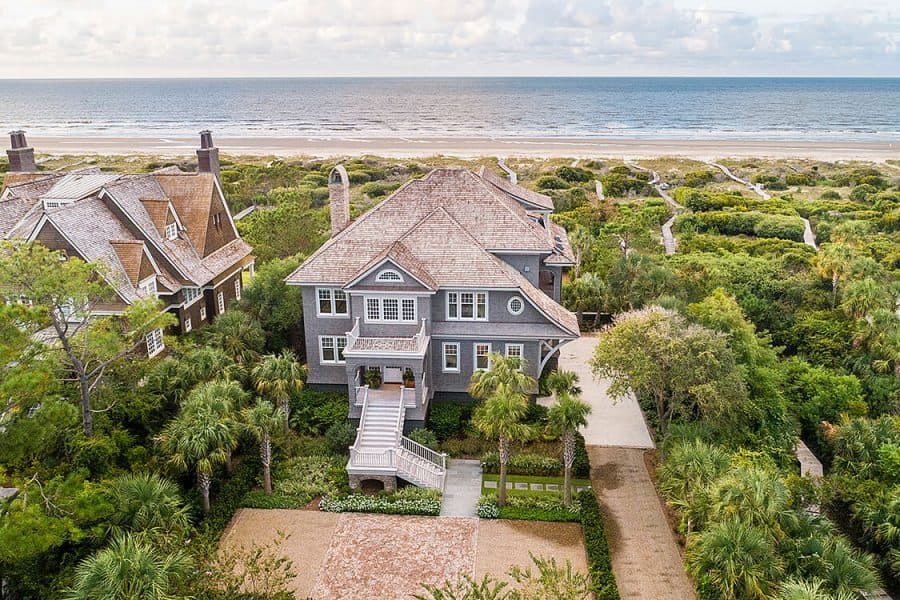
- $250–$350+ per square foot (est.) for higher-end coastal markets, elevated foundations, premium architectural details, and higher-finish specifications
- $350+ per square foot (est.) for luxury builds, complex structure (steel, large spans), custom exterior packages, and top-tier interiors
Those ranges look vague on purpose—because they are. A 2,200 sq ft home might cost $330,000 in one scenario and $700,000 in another, even in the same metro, because line items change (foundation, roof complexity, windows, trim package, cabinetry, HVAC zoning, site utilities, and more).
To show how quickly totals can diverge:
- 2,000 sq ft at $160/sf (est.) → ~$320,000 construction
- 2,000 sq ft at $240/sf (est.) → ~$480,000 construction
That’s a $160,000 swing before you even talk about land, driveway length, septic vs sewer, or floodplain requirements.
Where you build in South Carolina changes the math (city & regional variation)
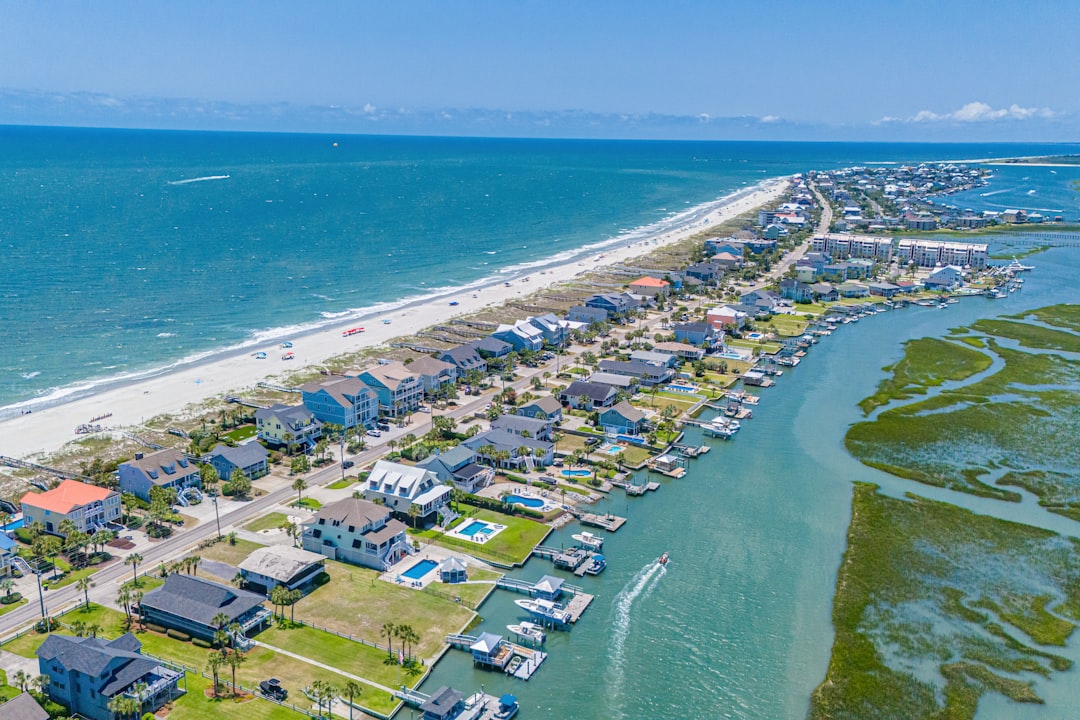
South Carolina isn’t one construction market. Labor availability, inspection requirements, wind/flood design expectations, and subcontractor pricing can vary sharply.
Typical patterns you’ll see in 2026:
Higher-cost areas (often)
- Charleston / Mount Pleasant / Johns Island / coastal Lowcountry
- Higher demand, tighter labor, and coastal code considerations (wind, corrosion, flood elevations)
- More frequent needs for elevated foundations, deeper piles, or more complex site drainage
- Hilton Head / Bluffton / Beaufort
- Premium market expectations and finish levels
- Site constraints and HOA/architectural requirements can increase soft costs and timelines
Mid-range (often)
- Columbia metro (Lexington, Irmo, Chapin)
- Broad builder base, many standard subdivisions, but costs still swing based on finishes and lot prep
- Greenville / Spartanburg / Upstate growth corridors
- Strong demand and expanding construction ecosystem; pricing varies by neighborhood and lot conditions
Lower-cost (often)
- Smaller towns and rural counties can be less expensive—unless the site requires long utility runs, septic engineering, major clearing, or the labor pool is thin (which can push subcontractor pricing up).
Wondering what these ranges mean for your town? The free calculator above localizes them to your ZIP.
Get my South Carolina estimate ↑Labor in 2026: wages don’t equal “labor cost,” but they show the pressure
Labor is one of the biggest reasons build costs don’t behave like a simple price list. Even if material prices stabilize, labor markets can tighten—and schedule delays are expensive.
Current 2026 wage datapoints in South Carolina (useful as directional indicators):
- Average carpenter pay in South Carolina: ~$23.25/hour (Apr 2026) (source: ZipRecruiter)
- Average electrician pay in South Carolina: ~$27.39/hour (Apr 2026) (source: ZipRecruiter)
Those are worker wage estimates—not the fully burdened rates you’ll see in a bid (which include payroll burden, insurance, supervision, overhead, profit, mobilization, and sometimes travel). Still, they help explain why two bids can be far apart in the same city: the subcontractor’s backlog and staffing can matter as much as the blueprint.
Material pricing in 2026: one commodity can swing multiple line items
Even a “typical” house is a bundle of commodities: lumber, OSB, drywall, copper, PVC, concrete, asphalt shingles, appliances, and more.
One easy example is lumber. In early April 2026, lumber pricing was reported around:
- ~$583.60 per 1,000 board feet (Apr 6, 2026) (source: Trading Economics)
You don’t buy a house in “board feet,” but framing packages, trusses, sheathing, and even schedule timing can be sensitive to lumber moves. And lumber is only one input—concrete and mechanical equipment can cause similar budget shocks, especially if your plan leans heavy into large slabs, retaining walls, or multiple HVAC systems.
The hidden “multipliers” that make two similar houses cost wildly different amounts
If you want to understand South Carolina build pricing, focus less on square footage and more on cost multipliers—choices or conditions that ripple through multiple trades.
1) Site prep and dirt work (the budget bender)
This is where the “same plan” can produce totally different totals.
Common South Carolina cost drivers include:
- Clearing trees (and hauling, grinding, or burning rules)
- Cut/fill and grading for drainage
- Driveway length (especially rural lots)
- Rock, high water table, or unsuitable soils
- Stormwater requirements (more common in regulated/coastal zones)
- Utility runs: trenching for power, water, sewer; or installing well/septic
A flat, cleared lot with nearby utilities might have modest site costs. A wooded lot requiring long runs and engineered septic can add tens of thousands fast.
2) Foundation type (and coastal elevation requirements)
Foundation choice isn’t just a structural decision—it can change excavation, concrete, framing, moisture control, and sometimes mechanical routing.
Common options:
- Slab-on-grade (often lowest cost when soil/drainage allows)
- Crawlspace (common in the Southeast; varies by height, vents/encapsulation, and access)
- Basement (less common in many SC areas; can be expensive depending on soil and water conditions)
- Elevated pier/pile systems (more likely near the coast / flood zones)
A plan priced for a slab can jump dramatically if the lot requires elevation or additional foundation engineering.
3) The exterior package: rooflines, brick, windows, and “curb appeal”
Exteriors are where “looks similar” becomes “not priced the same.”
Examples:
- Simple gable roof vs. multiple hips/valleys/dormers
- Fiber-cement lap siding vs. full brick vs. stone veneer accents
- Standard window schedule vs. oversized glass, transoms, black frames, or impact-rated units
Complex roofs also increase labor and waste—plus they affect underlayment, flashing, and long-term leak risk.
4) Mechanical, electrical, and plumbing complexity
MEP costs are not just “a house is a house.” Price changes with:
- Number of bathrooms (and how far they are from the water heater/sewer line)
- Multi-story layouts (stacking helps; sprawling plans can cost more)
- HVAC design: single system vs. multiple zones/units
- Electrical load: EV charger circuits, heavy kitchen loads, generator transfer switches
- Gas availability (if not available, you may be all-electric with different equipment costs)
5) Interior finishes (the line items people underestimate)
A builder can build “the same square footage” with very different allowances:
- Cabinets: stock vs semi-custom vs custom
- Countertops: laminate vs quartz vs premium stone
- Flooring: LVP vs hardwood vs tile throughout
- Trim: basic casing vs larger profiles, coffered ceilings, built-ins
- Fixtures: builder-grade vs designer selections
Finishes don’t just change material cost—they often change labor time (tile complexity, trim detail, paint prep), which compounds.
Permits and fees: why “local” matters (real 2026 examples)
Permits are one of the best examples of why online averages fail: fees are often tied to construction valuation, and valuations can vary by jurisdiction—plus trade permits, plan review fees, and application fees stack up.
Example: City of Charleston (fee schedule)
Charleston’s fee schedule (effective Oct 1, 2019; still used as published) shows:
- $40 permit application fee (in addition to other fees)
- Plan review fee = 50% of building permit fee when plans are required
- New residential valuation table lists $116.15/ft² for finished areas and $45.92/ft² for unfinished areas (City of Charleston Building & Trade Permit Fee Schedule)
That means two homes with the same heated square footage can still have different “permit math” if one has more porches, unfinished spaces, or accessory structures.
Example: Greenville County (residential permit fees)
Greenville County’s published residential permit fee document lists valuation assumptions such as:
- Heated: $251.10 per sq ft
- Garage/unheated: $99.72 per sq ft
- Unfinished basement: $47.25 per sq ft …and a valuation-based fee table plus separate trade permit minimums (Greenville County Residential Permit Fees PDF).
The big takeaway: permit totals aren’t universal, and they’re rarely just one fee. Your location can change the valuation basis, the fee table, and the number of departments involved.
A practical 2026 budgeting framework (what to price separately)
When people ask “How much to build in South Carolina?” they often combine apples and oranges. A cleaner way to budget is to separate the big buckets:
1) “Sticks and bricks” construction (the house itself)
This includes the core trade work: foundation, framing, roofing, siding, windows, rough-ins, insulation, drywall, interior finishes, and basic site work directly tied to the structure.
2) Site and utilities (can rival your kitchen budget)
Budget explicitly for:
- Clearing/grubbing
- Rough and final grading
- Driveway and culverts
- Septic or sewer connection
- Well or water tap fees
- Power run and meter
- Stormwater features (as required)
3) Soft costs (often forgotten until the last minute)
Depending on your project:
- Engineering (foundation, structural, septic)
- Survey and staking
- Plan modifications
- Permits/plan review/trade permits
- Temporary utilities, dumpsters
- Builder’s risk insurance
- Construction loan fees and interest carry (schedule matters)
4) “Nice-to-haves” that become must-haves
- Screened porch upgrades
- Fireplace changes
- Built-in showers, upgraded tile
- Outdoor kitchen stub-outs
- Fencing, landscaping, irrigation
Even if you don’t finalize these now, include placeholders so you don’t get blindsided.
Key Takeaway: the cost to build in South Carolina is a pricing problem, not a trivia question
In 2026, South Carolina build costs can vary dramatically—even for homes that look similar online—because pricing is driven by:
- Your exact location (local labor market, code/permit structure, coastal requirements)
- Your plan’s complexity (rooflines, spans, window schedules, bathrooms, MEP layout)
- Your site conditions (grading, utilities, soils, drainage, elevation)
- Your finish level (cabinetry, flooring, tile, trim, fixtures)
- Market timing (crew availability and material volatility like lumber)
The only reliable number is the one built from line-item quantities and local pricing, tied to your specific plan and build site.
Ready for a real number? See what a line-item report looks like (free) and price your plan (low cost)
If you’ve read this far, you already know why averages are dangerous for budgeting. The next step is to look at a line-item report—so you can see how real estimates are structured, what’s included, and where the money actually goes.
- Try a free demo report to explore the level of detail before you buy: Try a free demo report
- When you’re ready, order your custom Cost To Build report for your specific house plan (nearly 20 years of cost-report experience behind it) for just $32.95: order your custom Cost To Build report
A detailed, location-aware report won’t just give you a total—it shows the line items that create the total, so you can make smart design and finish choices before you spend real money.