In this article
Free instant estimate · ~30 seconds
Quick Estimator
No sign-upRough planning range based on your inputs and current regional cost indices — not a quote. Your plan, lot, and selections move the number; the full report prices all 60+ items to your exact zip.
✓ Free — no sign-up · ✓ 60+ line items · ✓ ZIP-localized · ✓ Planning figures, not bids
Cost To Build A House In Vermont (2026)
If you’ve been Googling “cost to build a house in Vermont,” you’ve probably seen estimates that don’t even look like they’re talking about the same state—because in a practical sense, they aren’t.
A build in downtown Burlington on a tight infill lot, a mountainside home near Stowe with a long driveway and blasting, and a farmhouse outside Brattleboro on a flat parcel can share the same square footage and still land hundreds of thousands of dollars apart once you account for site work, energy standards, trade availability, and finish level.
This guide uses current 2026-facing references where available, plus Vermont-specific permitting and wage context, to show why costs vary so much—and why a line-item estimate tied to your exact plan and zip code is the only way to budget with confidence.
The realistic 2026 range (and why “per square foot” is a trap)
National sources often present Vermont as a mid-to-upper-cost state, but Vermont’s reality is more “wide range” than “average.”
For example, Autodesk’s 2026 cost overview (updated late 2025) cites a broad national building range of $150–$300+ per sq. ft., and lists an average total of about $322,000 for a 2,000 sq. ft. home in Vermont (which implies roughly $161/sq. ft. using their methodology). That’s useful as a starting point, but it’s not a job-ready number—because it’s not accounting for Vermont’s most common cost multipliers like rural site prep, winter scheduling, basements, septic/well, and high-performance envelopes. (Source: Autodesk, “How much does it cost to build a house in 2026?”)
A practical 2026 Vermont budget range (construction only, excluding land) often ends up closer to:
- $225–$325 per sq. ft. for many “standard” new builds (builder-grade to mid-range finishes)
- $325–$450+ per sq. ft. for high-end custom homes, complex sites, or high-performance/architect-driven builds
That spread exists because “price per sq. ft.” silently changes with:
- foundation type (slab vs. basement vs. walkout)
- roof complexity and snow-load engineering
- window package (standard vinyl vs. high-performance triple-pane)
- HVAC approach (baseboard, heat pumps, hybrid systems)
- septic/well requirements
- driveway length, ledge/blasting, retaining walls
- finish level (tile, cabinetry, trim, flooring, lighting)
- and—often underestimated—trade availability and scheduling risk
Vermont cost examples: the same house size, three very different totals
To make the variability tangible, here are three illustrative 2026 scenarios for a 2,000 sq. ft. home (not including land). These are estimates to show spread—not quotes.
| Scenario (2,000 sq. ft.) | What drives cost | Rough build cost range |
|---|---|---|
| Flat lot near a village center, slab-on-grade, simple gable roof, mid-range finishes | lower excavation + shorter utility runs | $450k–$575k |
| Typical Vermont build: basement foundation, attached garage, mixed finishes, moderate site work | common “real world” scope | $525k–$700k |
| Mountain/rural site: long driveway, ledge work, septic complexity, high-performance envelope, custom interior | site prep + premium systems/finishes | $700k–$950k+ |
Notice what’s missing: a single “Vermont average.” That’s intentional—because an “average” doesn’t pay your bills when your lot needs blasting or your town requires added reviews.
Wondering what these ranges mean for your town? The free calculator above localizes them to your ZIP.
Get my Vermont estimate ↑Regional variation inside Vermont: where costs tend to run higher (and why)
Vermont is small, but construction costs don’t behave uniformly. Even when material pricing is similar statewide, labor access, inspection timelines, and site conditions change a lot by area.
Higher-cost pressure zones (often)
- Chittenden County (Burlington/South Burlington/Essex/Colchester): more demand, tighter sites, more formal permitting processes, competition for trades.
- Lamoille & Washington County resort-adjacent markets (Stowe/Waterbury area): custom work is common; high-end finish expectations push pricing up.
- Lakeshore and view corridors: steep lots, setbacks, erosion control, and driveway engineering can add major site costs.
Where builds may price “simpler” (not always cheaper)
- Some rural counties/towns: fewer zoning steps, easier access for excavation, and simpler site conditions can lower costs.
- But rural builds frequently add costs in other ways: longer travel time for crews, limited trade availability, longer material lead times, and costly utility runs.
Permits and fees: Vermont can be local—and very line-item
Permitting is one of the most location-specific parts of your budget. Some towns are straightforward; others involve zoning reviews, design review, or additional steps that affect timelines (and therefore carrying costs).
A concrete example: Burlington’s permit fees are tied to project valuation. A 2026 Burlington permit guide notes that building permit fees are based on estimated construction cost at $8.50 per $1,000 (with a $30 minimum), and that zoning fees may apply depending on project type. (Source: PermitFlow, “Burlington Building and Trade Permit Guide,” Apr 3, 2026)
What does that mean in dollars?
- On a $600,000 build valuation, a construction permit fee at $8.50 per $1,000 implies roughly:
$600 × $8.50 = $5,100 (construction permit portion alone), plus any zoning, recording, and trade permits.
That’s just one city. Your town may have different fee schedules, school impact fees, road access permits, driveway culvert rules, stormwater requirements, or separate electrical/plumbing permitting pathways.
Key point: permit costs aren’t just “a couple thousand.” They can be a few thousand to well over $10,000+ when you combine building, zoning, trades, septic/well permits, and any required reviews—especially in more regulated municipalities or complex builds.
Labor: the hidden driver behind “Vermont is expensive”
When people talk about “materials went up,” they often miss the bigger Vermont issue: labor availability and labor pricing.
Vermont’s wage landscape matters even before you hire specialized trades. Vermont’s Department of Labor notes the minimum wage increases to $14.42 for 2026 (effective January 1, 2026). (Source: Vermont Department of Labor / vtlmi.info “ELMI Wages & Income” page)
Minimum wage isn’t what skilled trades earn—but it does signal the broader labor-cost baseline for:
- jobsite cleanup
- material handling
- entry-level helpers
- some seasonal labor
- and it indirectly influences subcontractor overhead
Also, Vermont publishes prevailing wage schedules for certain public projects (state construction prevailing wages effective July 1, 2025 to June 30, 2026 are referenced through the same Vermont labor information portal). Even if your private residential job isn’t required to pay prevailing wage, those rates often reflect the market gravity of what trades can command when demand is high.
Translation: if crews are booked out and commercial/public work is strong, residential builders often pay more to secure consistent subcontractor schedules—especially for electrical, plumbing, HVAC, excavation, concrete, and framing.
Major cost buckets that swing Vermont builds the most
Here’s where Vermont projects most commonly blow past early budgets—and why two “similar” homes don’t price similarly.
1) Site work: driveway, excavation, ledge, drainage, and access
Site work is the most underestimated part of Vermont budgeting.
Common Vermont multipliers include:
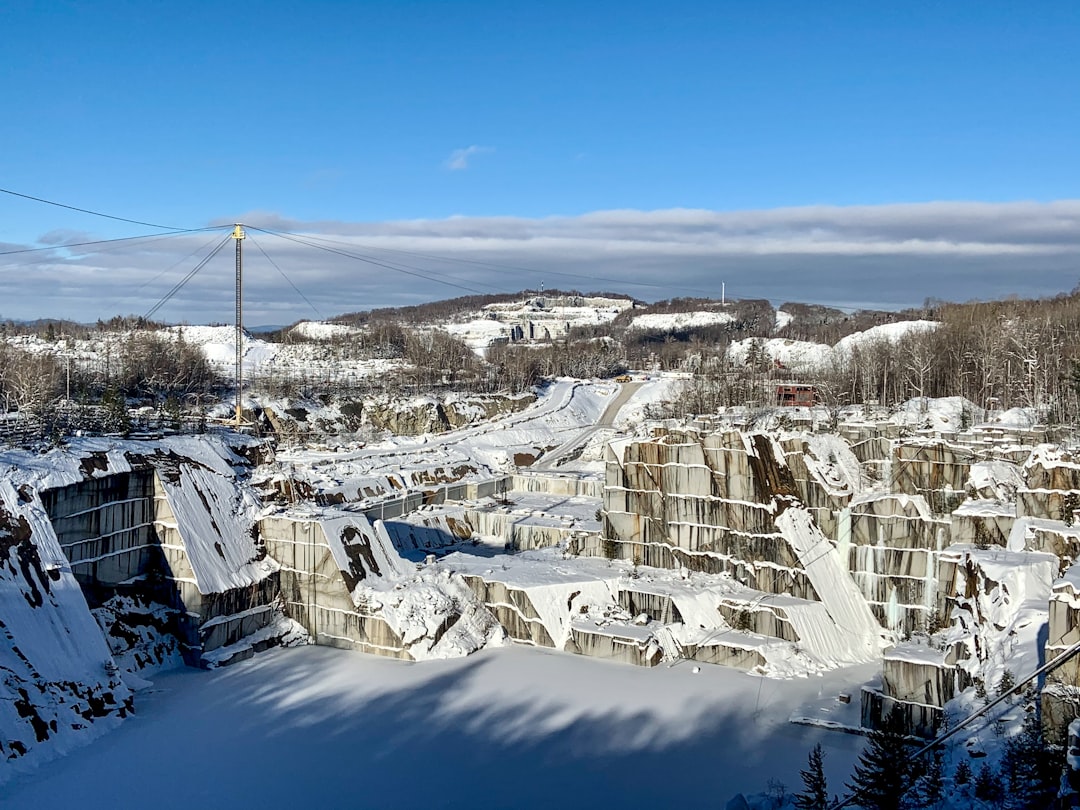
- Ledge/blasting (can turn a modest excavation into a major line item)
- Long driveways in rural parcels (base, gravel, culverts, winter access)
- Drainage and frost protection (critical in freeze/thaw cycles)
- Tree clearing and stumping
- Retaining walls on sloped sites
A “clean” lot might keep site work manageable. A tough lot can add tens of thousands to well over $100,000 before you’ve framed a wall.
2) Foundation choice: slab vs. basement vs. walkout
Vermont buyers often prefer basements for storage/mechanical space, and frost depth plays into foundation details. Your plan’s structure also matters (point loads, spans, bearing requirements).
As a national reference point, Autodesk’s 2026 guide suggests:
- slab foundations can be much lower cost than basements
- basement foundations can range widely (and jump significantly when finished space is added)
(Source: Autodesk)
In Vermont, basements can be cost-effective if the site cooperates—but on ledge or groundwater-heavy sites, they can become one of the biggest cost escalators.
3) The building envelope: insulation, air sealing, and window packages
Cold-climate performance isn’t optional in Vermont—it’s comfort, durability, and long-term operating cost.
Costs rise quickly when you move from:
- standard insulation + basic air sealing
to - upgraded assemblies (continuous exterior insulation, better membranes, advanced framing)
and especially to: - higher-performance windows/doors
These are smart upgrades, but they change the price per sq. ft. meaningfully—particularly because they touch multiple trades and details.
4) Mechanical systems: heat pumps, ventilation, and backups
Vermont homes increasingly lean on heat pump systems (often with electric resistance or other backup), plus proper ventilation (ERV/HRV) for tighter envelopes. The “system design” can be simple in an open ranch, and complex in a multi-story plan with long duct runs, bonus rooms, and mixed ceiling heights.
Mechanical cost is one of the most plan-dependent parts of pricing.
5) Finishes and “small choices” that aren’t small
The fastest way to turn a budget build into a premium build is through finishes:
- cabinets (stock vs. semi-custom vs. custom)
- counters (laminate vs. quartz vs. stone)
- tile (standard vs. large format + complex patterns)
- flooring (LVP vs. site-finished hardwood)
- trim level (basic casing vs. craftsman packages)
- lighting (builder allowance vs. designer fixtures)
Two homes with identical framing can be $75,000–$200,000+ apart purely on finish allowances.
Don’t forget “soft costs” and timeline costs
Even when you’re comparing builder quotes, many budgets forget:
- architectural/engineering
- soils testing (when required)
- surveying
- septic design and permitting
- construction loan fees + interest carry
- temporary utilities, dumpsters, erosion control
- winter conditions (heating the build, snow management, schedule delays)
Autodesk’s 2026 overview also highlights that labor and material costs make up the bulk of building expenses and that local conditions drive big differences; it also lists typical preconstruction items like permits, project management, and contingencies. (Source: Autodesk)
In Vermont specifically, weather and seasonal scheduling can quietly add cost—if a timeline pushes framing or exterior work into harsh conditions.
Why “online calculators” miss Vermont (and what to do instead)
Most online cost calculators do one thing: multiply square footage by a state number.
What they usually don’t do:
- price your foundation based on slope, soils, and frost considerations
- account for well/septic vs municipal hookups
- scale mechanical costs to your floor plan layout
- adjust labor for your county’s crew availability
- include local permit structures tied to valuation (like Burlington’s)
- reflect your finish selections room-by-room
That’s why people can “budget” $350,000 for a Vermont build and later learn their real all-in construction budget is $600,000+—with no single mistake, just a thousand unpriced decisions.
Key Takeaway: Vermont build costs are a range—because your plan and site create the price
In 2026, the cost to build a house in Vermont is best understood as a wide band rather than a single number. National references may peg Vermont around $322,000 for a 2,000 sq. ft. home using broad averages (Autodesk), but real Vermont projects commonly land much higher once you include foundations, site work, cold-climate envelope choices, and local labor/permit realities.
If you take nothing else from this guide, take this:
Your house plan + your lot + your town’s rules = your cost.
Anything else is just a headline.
Next step: see a real line-item report before you buy
If you want to move from “range” to “realistic,” the best step is to look at an actual line-item cost report—because that’s where the hidden drivers show up (foundation type, framing details, HVAC scope, insulation levels, cabinetry allowances, local labor, and more).
- Try a free demo report to interact with a sample and see exactly what a detailed report looks like.
- When you’re ready, you can order your custom Cost To Build report for your specific plan for $32.95.
Cost-to-build reporting is what we do—and we’ve been providing these detailed, plan-specific estimates for nearly 20 years—because building budgets don’t fail from one big surprise; they fail from dozens of small ones you didn’t see coming.