In this article
Free instant estimate · ~30 seconds
Quick Estimator
No sign-upRough planning range based on your inputs and current regional cost indices — not a quote. Your plan, lot, and selections move the number; the full report prices all 60+ items to your exact zip.
✓ Free — no sign-up · ✓ 60+ line items · ✓ ZIP-localized · ✓ Planning figures, not bids
Cost To Build A House In Georgia (2026)
If you’re trying to price a new build in Georgia in 2026, you’ve probably seen big, confident numbers like “$X per square foot.” The problem: those numbers are directionally helpful, but they hide the real story—Georgia home construction costs vary wildly based on where you’re building (metro vs. rural, coastal vs. inland), what you’re building (size, complexity, foundation, roof lines), and how you’re finishing it (standard builder-grade vs. semi-custom vs. luxury).
This guide uses current 2026-leaning market references and real examples (labor, permits, and regional factors) to show why a “quick estimate” can miss by tens—or even hundreds—of thousands of dollars. The point isn’t to give you a single answer. It’s to help you understand why you’ll want a line-item estimate for your exact plan and your exact build location.
The 2026 reality: “Cost to build” is a range, not a number
In Georgia, 2026 single-family build costs are commonly cited in very broad ranges. For example, CostToConstruct (a national cost calculator site) summarizes Georgia single-family home construction at roughly $200–$500 per sq. ft. in 2026 rates, with labor rates around $38–$58/hour and typical permit costs often landing in the $10,000–$22,000 range (depending on jurisdiction and scope). (Source: CostToConstruct, “Single Family Home Construction Cost in Georgia | 2026…”)
That spread—$200 vs. $500 per sq. ft.—is not a rounding error. It’s the difference between:
- a simpler rectangular home on a flat lot with midrange finishes, and
- a complex custom plan (multiple roof lines, tall ceilings, large spans), on a sloped lot, with upgraded windows/doors, premium exterior cladding, and higher-end kitchens/baths.
A quick illustration (why “per-square-foot” can mislead)
Two 2,500 sq. ft. homes can have completely different cost drivers:
- Home A: 2,500 sq. ft., simple footprint, slab-on-grade, asphalt roof, standard windows, midrange finishes
- Home B: 2,500 sq. ft., crawlspace or basement, complex roof, taller ceilings, upgraded exterior (brick/stone), high-end windows, custom cabinets, more built-ins
Even before land and financing, those can be separated by $150,000+ depending on specs and local market conditions.
Georgia cost differences by region (metro vs. coastal vs. rural)
Georgia isn’t one market. Labor availability, subcontractor pricing, and even inspection/permitting timelines can vary dramatically.
In plain terms, you’ll often see pricing pressure in:
- Metro Atlanta (Atlanta, Sandy Springs, Alpharetta, Marietta, Decatur): higher labor demand, more stringent zoning/overlay requirements in some areas, and more “expectation creep” in finishes
- Coastal markets (Savannah / Pooler / Brunswick / St. Simons area): potential wind, corrosion, or coastal durability considerations; higher demand in certain submarkets; occasional site/drainage challenges
- Mountain / North Georgia (Blue Ridge, Dahlonega, Ellijay): sloped lots, rock, longer driveway/utility runs, septic complexity; fewer subs in some pockets can raise bids
- Smaller cities & rural counties: labor may be less expensive, but fewer crews can mean scheduling delays; utilities (well/septic/power runs) can add large “hidden” costs
A reliable estimate has to apply local multipliers (labor + material logistics + contractor demand) and then reconcile them against the specific plan details.

Wondering what these ranges mean for your town? The free calculator above localizes them to your ZIP.
Get my Georgia estimate ↑The biggest cost drivers in Georgia (and why they swing your budget)
1) Site work and utilities: the “it depends” category that wrecks budgets
Site costs can be minimal—or enormous. Common Georgia site variables include:
- Slope and grading needs (especially North GA foothills and mountain lots)
- Soil conditions (stabilization, unsuitable fill, erosion control)
- Driveway length (long rural driveways add excavation, base, and paving costs)
- Utility availability: public sewer vs. septic; public water vs. well; distance to power
This is why two people building the same plan can have very different totals. A flat suburban lot with existing utilities is a different universe than raw acreage with a long utility run.
2) Foundation type: slab vs. crawlspace vs. basement
Foundation selection is one of the fastest ways to swing cost.
- Slab-on-grade: often the lowest cost path on level lots
- Crawlspace: can be beneficial for certain sites, but adds structural, ventilation, and access considerations
- Basement (full or partial): more common in parts of North Georgia; can add major excavation, waterproofing, and retaining needs—especially on sloped sites
The plan matters, too: a home designed for a slab may require structural redesign to go basement, changing costs beyond “just” concrete.
3) Framing complexity and lumber usage (your plan’s geometry matters)
Square footage alone doesn’t define framing cost. What matters:
- footprint complexity (bump-outs, angles, wings)
- roof complexity (valleys, dormers, multiple pitches)
- spans (engineered beams, LVLs, or steel)
- ceiling heights (two-story great rooms, tall walls)
A “simple 2,800 sq. ft.” can be cheaper than a “fancy 2,400 sq. ft.” if the 2,400 has complicated roof lines and engineered structure.
4) Mechanical systems: HVAC sizing, duct design, and efficiency targets
Georgia’s climate drives HVAC decisions differently than colder states:
- Long cooling seasons in much of the state
- Humidity management (dehumidification, tighter envelope, better ventilation strategies)
Upsizing equipment is not always the best answer; design choices like insulation levels, window performance, and air sealing can change HVAC scope and pricing.
5) Finishes: the budget multiplier most people underestimate
Finishes are where costs quietly balloon:
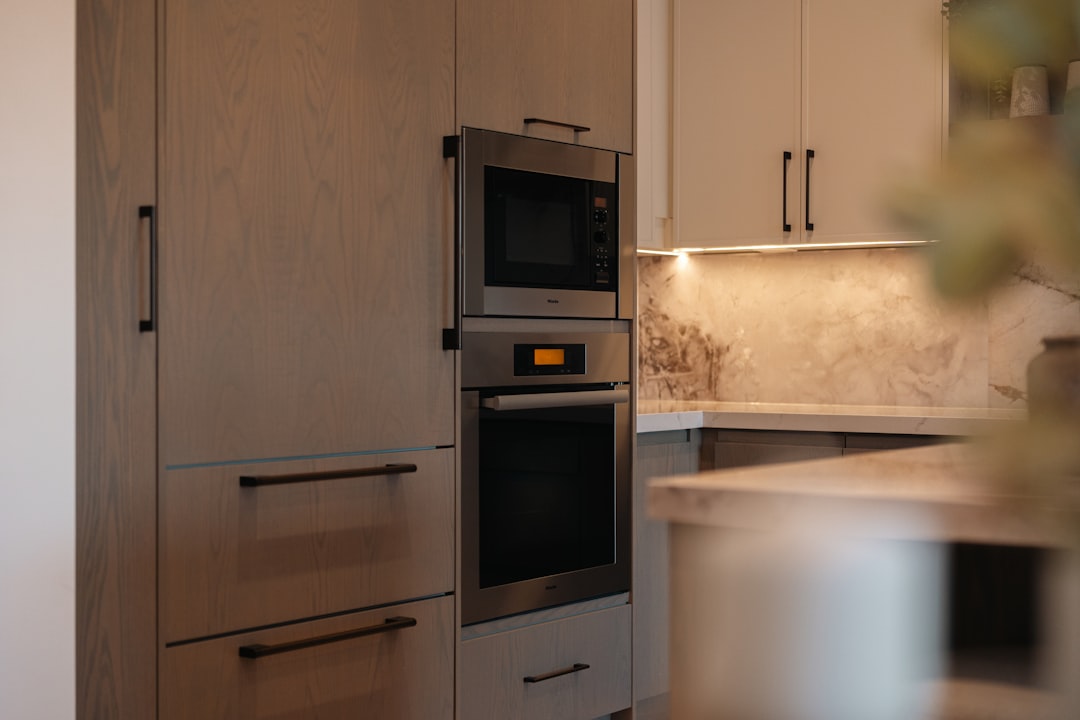
- Cabinets: stock vs. semi-custom vs. custom
- Countertops: entry-level granite vs. quartz vs. premium stone
- Flooring: LVP vs. hardwood vs. tile-heavy designs
- Trim: basic profiles vs. upgraded packages, beams, coffered ceilings
- Plumbing fixtures and lighting allowances: builder-grade allowances often don’t match what homeowners actually pick
If you want a realistic estimate, your budget needs to reflect your finish level, not a generic “average.”
Permits and local fees: a real example from Atlanta (why jurisdiction matters)
Permitting is one of the most location-dependent cost categories in Georgia.
For example, the City of Atlanta publishes a clear residential fee schedule showing the building permit fee at $7 per $1,000 of cost of construction (with a minimum building permit fee of $150), plus a $25 technology fee per permit. Atlanta also lists base fees for trade permits (mechanical/electrical/plumbing) and a Certificate of Occupancy fee (for one- and two-family new construction, listed at $100). (Source: City of Atlanta, “Getting started with our Zoning, Development, and Permitting Services” fee table.)
That’s just one city. Other Georgia jurisdictions may use different valuation tables, plan-review charges, impact fees, water/sewer tap fees, or inspection structures. Some areas also introduce additional reviews (historic districts, overlays, stormwater requirements) that can add time and cost.
Bottom line: permitting is not a flat statewide number. It’s a jurisdiction + scope + valuation calculation.
A more realistic way to think about total project cost (not just “build cost”)
When people say “cost to build,” they often mean only the contractor’s construction contract. But your total project budget may include:
- Construction (hard costs): labor + materials to build the home
- Site work: clearing, grading, utilities, driveway, retaining walls
- Soft costs: plan costs, engineering, surveys, energy reports, soil tests
- Permits/fees: building permit, trades, plan review, possible impact/tap fees
- Financing costs: construction loan fees, interest carry, inspections by lender
- Contingency: change orders, unknown site conditions, price shifts
- Land (if not already owned): purchase, closing, and sometimes carrying costs
A “tight” estimate that ignores soft costs and site work can look attractive—until reality shows up.
Why square footage alone fails in Georgia (and what matters more)
If you want a useful estimate, these inputs matter more than just size:
- Exact build location (city/county + neighborhood constraints)
- Foundation type and basement depth (if any)
- Footprint complexity and roof design
- Exterior cladding choice (fiber cement, brick, stone, stucco)
- Window/door performance level
- Cabinet/trim/finish specifications
- Garage size and whether it’s attached
- Porches and outdoor living (screened porches can be surprisingly expensive)
- Site specifics (slope, soil, utilities, tree density)
This is why a line-item estimate tied to a specific plan is so valuable: it forces realism into categories people typically underestimate.
Key Takeaway: Georgia build costs in 2026 are highly variable—plan + location decide everything
Georgia home construction pricing in 2026 is best understood as a wide range shaped by local market conditions and project specifics. Published references commonly show statewide ranges such as $200–$500 per sq. ft. along with labor rates around $38–$58/hour (with local variation), but those numbers only become meaningful after you account for site work, foundation choice, finish level, and your permitting jurisdiction. (Source: CostToConstruct; City of Atlanta permitting fee schedule)
If you’re serious about budgeting, the most reliable approach is to get a detailed, line-item cost breakdown for the exact plan you want to build—adjusted to your Georgia build location.
Next step: see a real line-item report (free), then price your exact plan (fast)
Costtobuildahouse.com has been providing detailed Cost To Build reports for nearly 20 years, and the entire point is to replace vague averages with a plan-specific, location-aware estimate you can actually use.
1) Try the demo first (it’s free)
Before you buy anything, you can Try a free demo report to see exactly how the line items are organized and what level of detail you’ll get.
2) Order your plan-specific report for $32.95
When you’re ready, you can order your custom Cost To Build report for just $32.95—built around your specific house plan so you can budget with far more confidence.