In this article
Cost To Build A House In Oregon (2026)
If you’re trying to pin down the cost to build a house in Oregon in 2026, you’ll quickly run into a frustrating truth: there isn’t one “Oregon price.” Two homes with the same square footage can land tens (or even hundreds) of thousands of dollars apart depending on where you build, what you build, and what your site demands.
This guide is designed to do the opposite of a one-number answer. Instead, you’ll see why costs vary so widely—and what line items usually drive the biggest swings—so you can make better decisions (and avoid budget surprises).
Free instant estimate · ~30 seconds
Quick Estimator
No sign-upRough planning range based on your inputs and current regional cost indices — not a quote. Your plan, lot, and selections move the number; the full report prices all 60+ items to your exact zip.
✓ Free — no sign-up · ✓ 60+ line items · ✓ ZIP-localized · ✓ Planning figures, not bids
Figures on this page come from the StartBuild cost engine — how we calculate.
2026 Oregon new-home cost ranges (why the spread is so large)
In 2026, many Oregon single-family builds fall into broad all-in construction ranges like:
- Economy / builder-grade: ~$200–$260 per sq ft
- Mid-range custom: ~$260–$380 per sq ft
- High-end custom / architect-driven: ~$380–$500+ per sq ft
Those wide bands aren’t a cop-out—they’re the reality of what happens when you combine Oregon’s varied terrain, seismic requirements, wet-side vs. dry-side climate demands, and big city permitting/development fees.
A Portland market snapshot, for example, shows $200–$500 per sq ft for single-family construction in 2026, with labor rates roughly $38–$58/hour and permit costs often $10,000–$22,000 depending on the project. (Source: CostToConstruct Portland single-family market overview, 2026 rates: https://costtoconstruct.com/calculator/single-family/oregon/portland)
A “same size, different outcome” example
Let’s say you’re building a 2,400 sq ft home:
- At $240/sf, that’s about $576,000 (construction only)
- At $375/sf, that’s about $900,000 (construction only)
- At $475/sf, that’s about $1,140,000 (construction only)
And that’s before land (and often before major site surprises). Oregon budgeting works best when you move from averages to your exact plan + your exact county/city + your actual site conditions.
Oregon regional price differences: why “where” matters as much as “what”
Oregon construction pricing is heavily local. Labor availability, subcontractor competition, local permit processes, and even travel time to the jobsite change pricing.
Here are typical 2026 tendencies you’ll see in many bids:
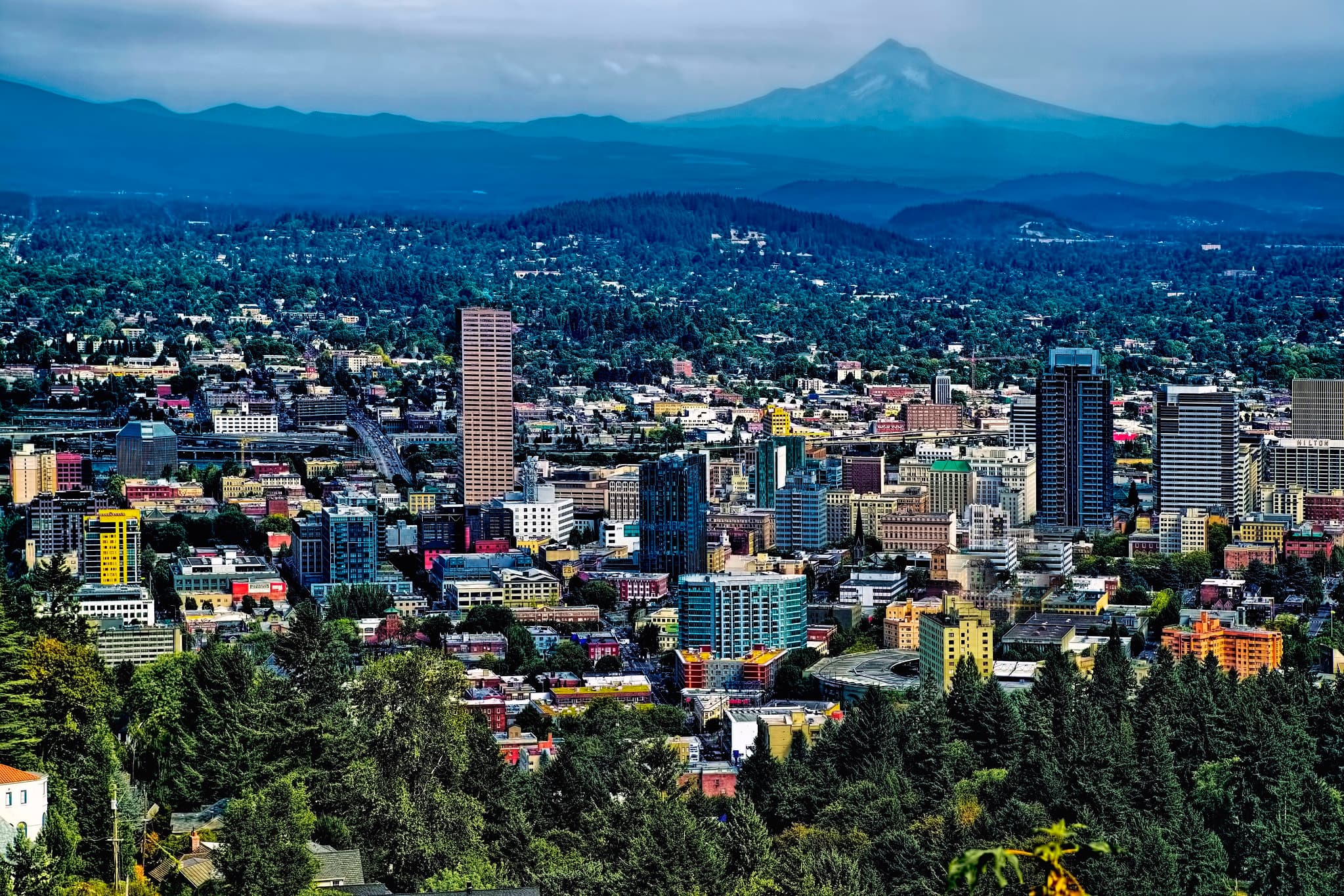
Portland metro (Portland / Beaverton / Hillsboro / Gresham)
- Often highest total “soft costs” (fees + reviews + development charges)
- Strong demand for skilled trades and stricter process requirements can raise GC overhead and schedule risk
- Portland-specific fees can include multiple layers (building + trade permits + surcharges + taxes)
Portland Permitting & Development notes that permit fees can come from multiple fee tables, that System Development Charges (SDCs) may substantially increase the project budget, and that a 12% Oregon state surcharge applies to building/trade permits. (Source: City of Portland fee schedules page: https://www.portland.gov/ppd/current-fee-schedules)
Portland also lists school construction excise tax rates (example districts shown) around $1.41–$1.67 per sq ft for residential as of July 1, 2025, which can still be a meaningful line item in 2026 budgeting. (Source: same Portland fee schedules page: https://www.portland.gov/ppd/current-fee-schedules)
Willamette Valley (Salem / Eugene / Corvallis)
- Often a bit less expensive than Portland proper, but still influenced by I-5 corridor demand
- Smoother sites can reduce excavation costs, but wetlands/soils can swing foundation pricing quickly
Central Oregon (Bend / Redmond / Sisters)
- High demand in many submarkets can push labor pricing and scheduling
- Cold winters and high desert conditions can change exterior assemblies, insulation details, and concrete scheduling
- Large rural lots can mean longer utility runs (power, water, septic) and higher mobilization costs
Southern Oregon (Medford / Grants Pass / Ashland)
- Can be less expensive than Portland/Bend depending on trade availability
- Wildfire resilience requirements and insurance-driven choices may increase exterior costs (roofing, vents, siding, defensible space work)
Oregon Coast (Astoria to Brookings)
- Coastal wind/rain exposure can increase exterior durability needs
- Access challenges, slope conditions, and corrosion-resistant materials can add cost
- Short weather windows can create schedule pressure and higher labor/overhead
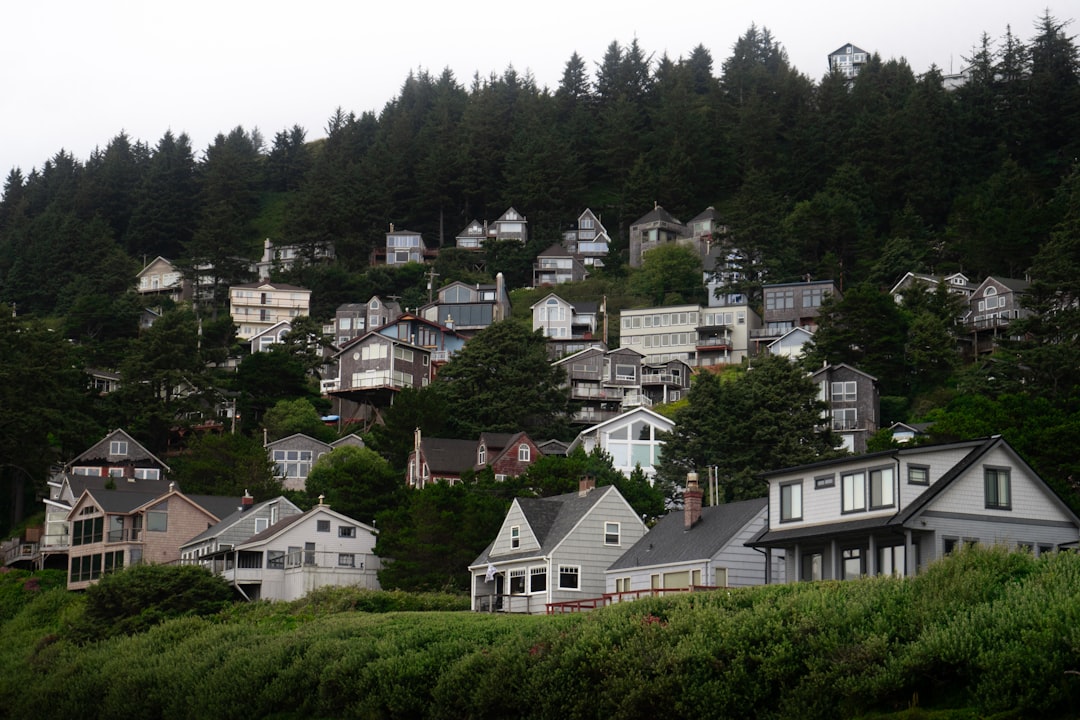
Wondering what these ranges mean for your town? The free calculator above localizes them to your ZIP.
Get my Oregon estimate ↑The biggest cost drivers in Oregon (what actually changes the price)
Most budgets don’t blow up because lumber moved 3%. They blow up because scope, site, and specifications were underestimated.
1) Site prep, earthwork, and utilities (often the wild card)
In Oregon, this category can be “reasonable” or it can dominate your contingency.
Common cost multipliers:
- Steep slopes (extra excavation, retaining walls, engineered fills)
- Poor soils (over-excavation, import, compaction, geotechnical requirements)
- Rock (hammering, blasting, haul-off)
- Long driveways (base rock, culverts, asphalt/concrete)
- Utilities not at the street (trenching + conduit + transformer coordination)
- Septic + well (where applicable), plus testing and permits
Rule of thumb for planning (estimates):
- Easier suburban lot: ~$20k–$60k for basic site/foundation-related prep (varies widely)
- Challenging rural or steep lot: ~$80k–$250k+ isn’t uncommon when retaining, long utilities, or rock enter the picture
2) Foundation choice and seismic detailing
Oregon’s seismic considerations affect engineering and sometimes foundation costs—especially for:
- Tall crawlspaces on slopes
- Split-levels and daylight basements
- Large open floor plans requiring beams/hold-downs/shear walls
Common foundation types and how they shift budgets:
- Slab-on-grade: often lower cost on flat sites, but can increase insulation and moisture detailing needs
- Crawlspace: common in Oregon; cost depends heavily on stem wall height, access, and drainage
- Basement/daylight basement: can add significant cost, but may reduce site grading on slopes and add useful square footage
3) Framing complexity (not just square footage)
Two 2,400 sq ft homes can have radically different framing costs.
Cost-up features:
- Multiple roof lines and valleys
- Tall ceilings and large spans
- Cantilevers
- Many corners/bump-outs
- Heavy timber, engineered beams, steel components
This is why “price per sq ft” breaks down: complexity changes labor hours and waste.
4) Mechanical systems (HVAC, plumbing, electrical)
These systems are where “nice-to-have” options quietly turn into five-figure upgrades.
High-impact choices:
- Heat pump vs. furnace
- Ducted vs. ductless systems
- Zoning / multiple air handlers
- Upgraded electrical service (200A to 400A), EV circuits, solar-ready
- Whole-house ventilation strategy and controls
- Extra bathrooms, wet bars, laundry rooms, outdoor kitchens
5) Interior finishes (the most visible budget lever)
Finishes are often the largest controllable variable—because they compound across the entire house.
Examples of finish-driven swing points:
- Custom cabinets vs. stock
- Tile density (how many bathrooms and how much wall tile)
- Hardwood vs. LVP vs. carpet mix
- Premium windows/doors
- Architectural lighting and trim packages
A “midrange” spec and a “high-end” spec can differ by $75–$200+ per sq ft in some projects once cabinetry, windows, tile, and fixtures stack up.
Permits, fees, and “soft costs” in Oregon: easy to underestimate
Many homeowners plan for construction and forget the stack of non-construction costs that still hit the budget.
Portland-area examples (real fee categories that can apply)
Portland’s fee schedule guidance highlights several items that can stack:
- Fees from multiple tables (building + trade + site development)
- System Development Charges (SDCs) (can “increase a project’s budget substantially”)
- Metro Construction Excise Tax (may apply)
- 12% Oregon state surcharge on building/trade permits
- School construction excise tax charged per square foot in listed districts
- Affordable Housing Construction Excise Tax (Portland notes 1% of permit valuation for qualifying projects)
(Source: City of Portland fee schedules page: https://www.portland.gov/ppd/current-fee-schedules)
Even outside Portland, most Oregon jurisdictions have their own plan review fees, utility connection fees, transportation or parks charges, and inspection structures—so you can’t reliably copy a friend’s permit number from another city.
Labor and material conditions entering 2026 (why timing still matters)
Labor is still a major pricing driver
Even when materials stabilize, labor can keep prices elevated—especially in high-demand metros.
Oregon’s Bureau of Labor & Industries (BOLI) publishes prevailing wage rate books and updates them quarterly, showing how wages differ by occupation and region. The existence of region- and trade-specific wage schedules is a reminder that labor isn’t one statewide number. (Source: BOLI prevailing wage rates page, includes 2026 rate books and amendments: https://www.oregon.gov/boli/employers/pages/prevailing-wage-rates.aspx)
While prevailing wage applies to public works, it’s still useful for understanding wage pressure and regional trade differences that can influence the broader labor market.
Materials: more stable than the early 2020s, but not “cheap”
A Portland market cost index report (nonresidential, but widely cited for market direction) indicates that entering 2026, supply chains show more resilience and stabilization, but headwinds remain in metals and long-lead electrical equipment. It also reports year-over-year increases (national) in tracked categories such as labor and materials through Q4 2025. (Source: Mortenson Construction Cost Index, Portland Q4 2025: https://www.mortenson.com/cost-index/portland)
For homeowners, the practical takeaway is: availability and lead times can still drive costs through:
- schedule delays (more general conditions/overhead)
- substitutions (sometimes more expensive)
- rushed decisions (change orders)
A realistic 2026 cost breakdown (example line-item thinking)
Here’s an example of how an Oregon build budget is often distributed. These are planning-level estimates (not quotes) and vary by design and site:
- Site work + excavation + utilities: 10%–25%
- Foundation: 8%–15%
- Framing + sheathing + structural: 15%–25%
- Roofing + siding + exterior finishes: 8%–15%
- Windows + exterior doors: 5%–12%
- MEP (HVAC, plumbing, electrical): 15%–25%
- Insulation + drywall: 6%–12%
- Interior finishes (cabinets, flooring, tile, paint, trim): 15%–30%
- GC overhead/profit + general conditions: 10%–20% (varies by delivery method and risk)
Why online averages fail (and what to do instead)
Online calculators and “average cost per square foot” articles can be useful only for a first-pass sanity check. They fail because they rarely capture:
- your plan’s complexity (rooflines, spans, glazing, structural)
- your exact specs (windows, cabinets, tile, fixtures, HVAC)
- your local fees and utility requirements
- your lot conditions (slope, soils, access, rock, drainage)
- your schedule risk (lead times, weather windows, subcontractor availability)
The smartest move is to get a line-item estimate tied to your plan, so you can see where the money goes and which decisions move the needle.
Key Takeaway
In 2026, the cost to build a house in Oregon is best understood as a range shaped by location, site conditions, plan complexity, and finish level—not as a single statewide number. Between Portland-area fees (SDCs, surcharges, excise taxes), Oregon’s varied terrain and climate zones, and project-specific design choices, it’s normal for two “similar size” homes to have dramatically different total costs. The only reliable way to budget is to estimate your exact plan in your exact city/county, with your actual site assumptions.
Ready for a more accurate Oregon estimate? (Free demo + $34.95 custom report)
If you want to see what a true line-item estimate looks like before spending anything, Try a free demo report. It’s an easy way to preview the level of detail—by trade and material—so you know exactly what you’re getting.
When you’re ready to budget for your house plan and your Oregon location, you can order your custom Cost To Build report for $34.95. Costtobuildahouse.com has been providing detailed cost-to-build reports for nearly 20 years, and the goal is simple: help you replace vague averages with a practical, plan-specific estimate you can actually build decisions around.