In this article
Cost To Build A House In Nevada (2026)
If you’ve tried to get a straight answer to “How much does it cost to build a house in Nevada?”, you’ve probably seen wildly different numbers. That’s not because people are being vague—it’s because home construction is a long chain of pricing variables, and Nevada amplifies many of them: fast-growing metros, hot/cold climate zones, strict water and energy considerations, and permit/impact fee systems that vary by jurisdiction.
This guide uses current 2026 reference points (with sources) to show why costs vary so much—and why the only reliable number is a line-item estimate built around your exact house plan and build location.
Free instant estimate · ~30 seconds
Quick Estimator
No sign-upRough planning range based on your inputs and current regional cost indices — not a quote. Your plan, lot, and selections move the number; the full report prices all 60+ items to your exact zip.
✓ Free — no sign-up · ✓ 60+ line items · ✓ ZIP-localized · ✓ Planning figures, not bids
Figures on this page come from the StartBuild cost engine — how we calculate.
Nevada build costs in 2026: the realistic range (and why it’s so wide)
In 2026, many Nevada custom builds land somewhere in a broad “middle” range, but it’s common to see projects span from relatively simple, production-style construction to high-end custom homes with expensive site work and finishes.
Here are useful starting-point estimates (not quotes):
- Reno area benchmark range: about $200–$500 per sq ft depending on finish level, complexity, and market conditions (CostToConstruct, “Single Family Home Construction Cost in Reno, Nevada | 2026…”)
Source: https://costtoconstruct.com/cost/single-family/nevada/reno
That range is intentionally wide because two homes with the same square footage can have completely different budgets when you change:
- the foundation (slab vs. crawlspace vs. basement)
- the site (flat infill lot vs. steep hillside with retaining walls)
- the structure (simple rectangle vs. complex rooflines and spans)
- the finish level (builder-grade vs. luxury)
- the jurisdiction (fees, impact charges, inspections, utilities)
- the timing (labor availability, scheduling, subcontractor demand)
Why Nevada is especially variable: regional and city-level cost drivers
Nevada isn’t one market. It’s several:
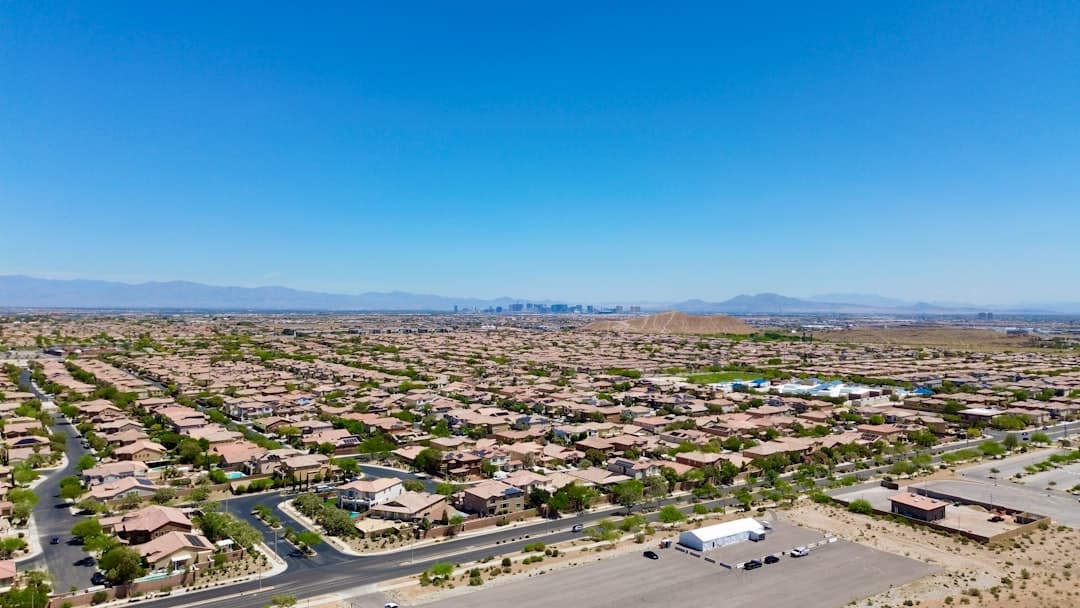
Las Vegas / Clark County: scale, demand, and fees add up
Southern Nevada’s labor market and development pace can push pricing—especially for trades like electrical, plumbing, and framing when demand spikes.
A cost category many homeowners underestimate here is fees beyond the building permit. For example, the City of Las Vegas notes multiple add-on charges such as:
- Residential Construction Tax (Park Fees): effective Jan 1, 2024 1% of construction valuation (or $1,000 per dwelling unit in certain cases)
- Clark County Transportation Tax Act: $1,000 per single-family dwelling unit
- Traffic Impact Fees: $195 per single dwelling
- Sewer Connection Charges: ERU $3,235 effective Jan 1, 2026
Source: https://www.lasvegasnevada.gov/Business/Permits-Licenses/Building-Permits/Permit-Fee-Estimator
Those are not “small paperwork costs.” Depending on your build value and utility needs, fees can move the budget by thousands to tens of thousands.
Reno / Sparks / Washoe County: valuation formulas, impact fees, and local adjustments
In Washoe County, permit-related costs are heavily tied to the project valuation and specific fee tables. Washoe County publishes both valuation guidance and a permit fee schedule.
Two examples that matter for budgeting:
- Park Tax: Washoe County notes a park tax assessed on undeveloped lots per NRS 278.4983 as 1% of valuation (or $1,000 per residential dwelling unit, whichever is less).
- Building permit fee schedule by valuation: e.g., for projects $100,000.01 to $500,000.00, the fee is $1,097.62 for the first $100,000 plus $5.93 per additional $1,000 (and other brackets above/below that).
Source: https://www.washoecounty.gov/building/getting_started/how_much_will_my_permit-cost.php
Washoe also flags localized adjustments:
- Incline Village area add 15 percent (in their construction cost valuation guidance).
Source: https://www.washoecounty.gov/building/getting_started/how_much_will_my_permit-cost.php
That single line illustrates the theme of this article: location changes the math—even within the same county.
Rural Nevada: fewer subs, longer travel, different logistics
Outside the major metros, you may see:
- higher mobilization/travel costs for specialty trades
- longer lead times for inspections and scheduling
- more reliance on septic/well, propane, grading, and driveway work (site-dependent)
Rural projects can be cheaper in some labor categories but more expensive in logistics and site development.
Wondering what these ranges mean for your town? The free calculator above localizes them to your ZIP.
Get my Nevada estimate ↑The biggest cost components (and where “per sq ft” breaks down)
Most new-home budgets can be understood in major buckets—but the percentage in each bucket depends on your plan and site.
1) Site work and utilities (the most underestimated line item)
This is where Nevada can surprise homeowners, especially on custom lots.
Site work can include:
- clearing and grubbing
- grading and compaction
- soil testing, geotechnical requirements
- trenching utilities (water, sewer or septic, power, gas)
- stormwater and drainage
- retaining walls (common on sloped lots)
- driveway/approach work
If your lot needs major grading or retaining, the “cost per sq ft” framing number won’t warn you. You can have a modest home with high site costs.
2) Foundation choice (slab vs. crawlspace vs. basement)
Nevada foundations often lean slab-on-grade, but the right choice depends on:
- frost considerations in northern Nevada
- expansive soils or engineered fill
- slope (walk-out options)
- desired mechanical space and storage
A basement (or deep foundation work) can quickly shift costs because it changes excavation, concrete volume, waterproofing, and sometimes structural engineering.
3) Framing and structure complexity
A simple, efficient footprint typically builds cheaper than a plan with:
- multiple roof planes and valleys
- long spans (LVLs/steel)
- tall great rooms or complex two-story spaces
- extensive exterior corners and bump-outs
Even before finishes, complexity drives labor hours and material waste.
4) Mechanical, electrical, and plumbing (MEP): labor matters more than most people think
When homeowners see a “materials list,” they sometimes assume materials drive everything. In reality, labor rates and availability are decisive—especially for licensed trades.
Nevada publishes prevailing wage determinations by region (a public-works benchmark that helps illustrate labor intensity and regional differences). For example, in the Clark County Region prevailing wage document (effective 3/2/26), you can see high fully-loaded hourly “wage” figures (which include fringes) such as:
- Carpenter Journeyman: $79.52/hr
- Electrician Wireman: $86.46/hr
- Plumber/Pipefitter Journeyman: $87.43/hr
Important: your private residential project may not use prevailing wage rates, and contractor pricing includes overhead, burden, and market conditions. But these figures help explain why MEP lines can be major budget drivers in Nevada—especially when demand is high and schedules are tight.
5) Exterior finishes: stucco, siding, roofing, windows
Nevada’s climate and design trends often push toward:
- stucco or fiber cement exteriors
- higher-performance windows
- roofing packages tuned for heat and UV
Window packages alone can swing dramatically depending on:
- size and number of openings
- window type (single-hung vs. sliders vs. large multi-panel doors)
- glass performance targets
6) Interior finishes (where budgets diverge fast)
Interior finish choices can turn “same plan, same size” into two different budgets.
Big swing categories include:
- cabinets and countertops
- flooring type and square footage
- tile density (showers, backsplashes)
- fixture quality (plumbing and lighting)
- interior doors and trim detail level
A high-end kitchen/bath specification can add tens of thousands quickly—without changing the floor plan at all.
Example: why two Nevada homes with the same square footage don’t cost the same
Imagine two 2,400 sq ft homes:
Home A (lower complexity)
- flat lot with easy access
- slab foundation
- simple roofline
- standard window sizes
- mid-grade finishes
Home B (higher complexity)
- sloped lot requiring retaining + engineered grading
- upgraded foundation design
- complex roof + tall ceilings
- large glass openings
- premium finishes and custom cabinetry
Both are “2,400 sq ft,” but Home B could easily land hundreds of thousands higher depending on site and finish decisions. That’s why broad per-square-foot figures are only a starting point.
Permits, taxes, and connection fees: treat them as a real budget category
Across Nevada jurisdictions, you’ll typically see combinations of:
- building permits and plan review
- zoning and planning review
- impact/transportation fees
- park fees/construction taxes
- sewer or water connection charges
- inspections and resubmittal fees
In Las Vegas, for example, the city explicitly notes that their permit fee estimator is a planning tool and that other fees (zoning, sewer connection, impact fees) are not included—yet those “other fees” often become some of the most painful surprises if they aren’t budgeted early.
Source: https://www.lasvegasnevada.gov/Business/Permits-Licenses/Building-Permits/Permit-Fee-Estimator
Key Takeaway
Nevada home construction costs in 2026 can’t be captured by one “average” number because pricing is shaped by location, site conditions, plan complexity, labor market pressure, permitting/impact fees, and finish selections. The only way to budget confidently is to price your build the way contractors do: line by line, for your exact plan, on your exact lot, under your local jurisdiction’s rules.
See your costs line-by-line (free demo + affordable custom report)
If you’re serious about building in Nevada, the most helpful next step is to stop guessing with broad averages and look at a detailed, itemized estimate built around your plan.
Costtobuildahouse.com has been providing cost-to-build reports for nearly 20 years, and the reports are designed to show the real “moving parts” behind the total.
- Start by exploring the free interactive sample so you can see exactly what a report looks like: Try a free demo report
- When you’re ready, get pricing tailored to your house plan and Nevada location for $34.95: order your custom Cost To Build report