In this article
Cost To Build A House In Utah (2026)
If you’ve been Googling “cost to build a house in Utah,” you’ve probably seen a wide range of numbers—and that’s not because anyone is lying. It’s because construction pricing is inherently variable. Two homes with the same square footage can land tens (or hundreds) of thousands of dollars apart depending on location, site conditions, structure choices, finishes, and the local labor market.
In this 2026 guide, we’ll use current Utah cost benchmarks (with sources) to show why prices vary so much—and why the most reliable next step is a line-item estimate for your exact house plan in your exact city/zip code.
Free instant estimate · ~30 seconds
Quick Estimator
No sign-upRough planning range based on your inputs and current regional cost indices — not a quote. Your plan, lot, and selections move the number; the full report prices all 60+ items to your exact zip.
✓ Free — no sign-up · ✓ 60+ line items · ✓ ZIP-localized · ✓ Planning figures, not bids
The honest 2026 answer: Utah has a “range,” not a single price
A useful way to think about Utah build costs is as a set of overlapping ranges:
- State baseline (standard finish): around $121/sq ft (RSMeans-based baseline referenced by a Utah city cost guide)
- Salt Lake City (standard finish): about $136/sq ft, with a $236k–$347k range for a typical 2,000 sq ft home (2026 RSMeans-based local index)
- St. George (standard finish): about $123/sq ft, with a $215k–$316k range for a typical 2,000 sq ft home (2026 RSMeans-based local index)
Sources:
- Cost to Build a House in Salt Lake City (2026; based on 2026 RSMeans data): https://www.costtobuildhouse.com/states/utah/salt-lake-city
- Cost to Build a House in St. George (2026; based on 2026 RSMeans data): https://www.costtobuildhouse.com/states/utah/st-george
Important: those per-square-foot figures are helpful anchors, but they are not a quote. They are based on a typical home and a defined finish level. Change the plan shape, roof complexity, foundation, or finishes—and your “per sq ft” can jump quickly.
City-level variation in Utah: why your zip code can change the budget
Utah is not one construction market. Costs shift by metro area, growth pressure, subcontractor availability, and even how far materials have to be delivered.
Here are 2026 example benchmarks drawn from RSMeans-based city indexing:
| Utah location | Est. standard cost per sq ft (2026) | Notes |
|---|---|---|
| Salt Lake City | ~$136/sq ft | Higher local cost index (~1.12x vs Utah baseline) |
| St. George | ~$123/sq ft | Near the state average (~1.02x vs Utah baseline) |
| Utah baseline (referenced) | ~$121/sq ft | Used as a comparison point in city indexing |
Sources:
- Salt Lake City cost guide (2026): https://www.costtobuildhouse.com/states/utah/salt-lake-city
- St. George cost guide (2026): https://www.costtobuildhouse.com/states/utah/st-george
What that means in real budgets (example only)
If you used those “standard finish” benchmarks as a starting point for a 2,000 sq ft house:
- Salt Lake City: ~2,000 × $136 = $272,000 (typical standard example shown in the source page is ~$277,760)
- St. George: ~2,000 × $123 = $246,000 (typical standard example shown is ~$252,960)
Even before we talk about land, financing, or unusual site work, that’s already a meaningful difference—for the same-sized house.
Wondering what these ranges mean for your town? The free calculator above localizes them to your ZIP.
Get my Utah estimate ↑Why “per square foot” is a trap (and still useful)
Per-square-foot numbers are popular because they’re easy. The problem is that houses aren’t priced by square foot—they’re priced by assemblies and decisions:
- Excavation style and soil conditions
- Slab vs crawlspace vs basement
- Roof pitch, valleys, dormers, and overhangs
- Window count, size, and performance level
- Mechanical system complexity (zoning, heat pumps, HRVs/ERVs)
- Cabinetry grade, tile scope, countertop material
- Exterior cladding (vinyl vs fiber cement vs stone)
- Site distance from utilities and trenching needs
Two quick examples:
- A 2,000 sq ft simple rectangle ranch on a flat lot can cost less than a 2,000 sq ft two-story with complex rooflines—even if the “sq ft” is the same.
- A 2,400 sq ft home can sometimes come in with a lower $/sq ft than a 1,600 sq ft home because fixed-cost items (permits, mobilization, kitchens, mechanical rooms) get spread over more area.
Major cost drivers in Utah (2026) that change pricing fast
1) Site work, excavation, and utilities (the “it depends” category)
Utah has everything from flat valley lots to steep foothills sites. That matters because:
- Rock excavation can dramatically increase costs.
- Steeper lots often require retaining walls, engineered slopes, and more complex foundation plans.
- Rural builds may need longer utility runs, power extensions, propane, septic, or well work.
In many Utah builds, site work and utilities can be “reasonable”… until they aren’t. This is why generic online calculators routinely miss the mark: they assume a “normal” lot.
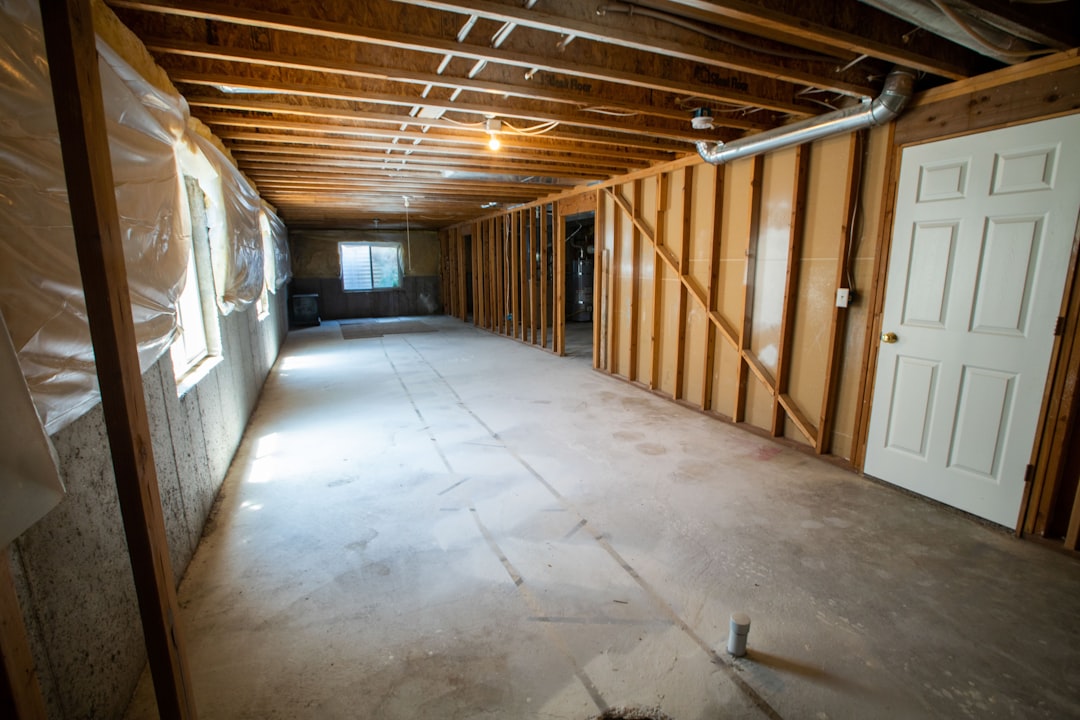
2) Foundation choice: slab vs crawlspace vs basement
A basement can add usable space, but it also brings:
- More excavation
- More concrete and reinforcement
- Waterproofing and drainage strategy
- Potential radon mitigation measures (region-dependent)
- Additional mechanical planning
A slab-on-grade may be lower cost on the right lot—but frost depth, soil conditions, and desired plumbing layouts can change that.
3) Framing and structural complexity
Utah’s market can see real swings in lumber packages and labor scheduling. Beyond “price per stud,” the plan itself matters:
- A compact plan with stacked walls and clean load paths is more efficient.
- Multiple bump-outs, bays, vaulted ceilings, and long spans drive up beams, hardware, and labor time.
4) Mechanical, electrical, plumbing (MEP) decisions
MEP costs change when you add:
- Dual-zone HVAC
- Heat pump systems and upgraded electrical service
- Tankless vs tank water heaters
- Extra bathrooms or fixture-heavy kitchens
- Whole-home ventilation/filtration upgrades
MEP is also heavily tied to local subcontractor availability—one of the biggest hidden cost drivers during fast-growth cycles.
5) Finish level (the biggest source of sticker shock)
The Salt Lake City and St. George benchmarks show how finish level moves totals for the same size home:
-
Salt Lake City (2,000 sq ft example):
- Basic: ~$116/sq ft (~$231k)
- Standard: ~$136/sq ft (~$272k)
- Premium: ~$184/sq ft (~$367k)
Source: https://www.costtobuildhouse.com/states/utah/salt-lake-city
-
St. George (2,000 sq ft example):
- Basic: ~$105/sq ft (~$209k)
- Standard: ~$123/sq ft (~$246k)
- Premium: ~$166/sq ft (~$332k)
Source: https://www.costtobuildhouse.com/states/utah/st-george
Notice what’s happening: “premium” isn’t just nicer paint. It usually includes broader scope—more cabinetry, more tile, higher-end windows/doors, upgraded exterior finishes, and more detailed trim work.
Permits and plan check fees in Utah: real schedules (example from Salt Lake County)
Permits are another category where online “cost per sq ft” estimates often undercount because fees vary by jurisdiction and valuation method.
For example, the Salt Lake County FY2026 fee schedule notes:
- Building Permit – Minimum Fee: $70
- Plan Check Fee (residential construction): 40% of building permit fee
- State surcharge: 1% of permit fee on building/mechanical/plumbing/electrical permits
Source (Salt Lake County FY2026 fee schedule PDF): https://msd.utah.gov/DocumentCenter/View/1471/FY-2026-SLCo-Fee-Schedule
It also shows that permit fees are often calculated from construction valuation brackets, not simply from your floor area. That means two homes with the same square footage can generate different fee totals if one has higher declared valuation due to materials/finishes or additional scope.
Practical budgeting tip
Even if someone tells you “permits are $1,500–$4,500,” treat that as a starting point. The more reliable approach is to budget permits as a line item tied to your jurisdiction’s schedule and your project’s valuation, plus trade permits, utility connection fees, and any special overlays (hillside, floodplain, etc.).
A realistic “all-in” thinking framework (construction vs total project cost)
When people say “cost to build,” they may mean different things:
- Construction cost (structure + labor + materials to build the home)
- Total project cost (construction + site work + permits + design + surveys + utilities + financing + driveway/landscaping + contingencies)
- Land included (some people bundle land, which can dwarf the build cost in certain areas)
So if your “build cost” is $272,000 for a standard 2,000 sq ft home in Salt Lake City (example benchmark), your total project cost could be notably higher once you add:
- Site prep and utility hookups (often material in Utah; the SLC guide references $15,000–$45,000 as a typical add-on range)
Source: https://www.costtobuildhouse.com/states/utah/salt-lake-city - Permits and plan checks (jurisdiction-based)
- Driveway, flatwork, fencing, landscaping
- Contingency (especially for excavation surprises or material volatility)

Timeline impacts costs too (yes, really)
Time is money in construction. In the Salt Lake City and St. George 2026 guides, typical timelines are described around 9–14 months from permit to move-in, with permitting potentially taking 6–12 weeks (varies by complexity and jurisdiction).
Sources:
- https://www.costtobuildhouse.com/states/utah/salt-lake-city
- https://www.costtobuildhouse.com/states/utah/st-george
A longer schedule can increase:
- Construction loan interest
- Temporary housing costs
- Price exposure to materials that fluctuate during the build
- Change-order risk (because you live with decisions longer)
The easiest way to lower cost (without regretting it later)
If you’re trying to control budget in Utah, the biggest “high leverage” moves are usually:
- Simplify the footprint (clean rectangle/square beats complex shapes)
- Reduce roof complexity (fewer valleys/dormers)
- Limit expensive wet areas (bathrooms, laundry relocations, long plumbing runs)
- Choose consistent finish tiers (don’t mix ultra-premium items into a builder-grade base without re-pricing the whole plan)
- Get the site understood early (soil, slope, utilities, access)
The theme: cost control comes from design discipline and early clarity, not from hoping a single statewide average will apply to your project.
Key Takeaway
In 2026, the “cost to build a house in Utah” isn’t one number—it’s a spectrum shaped by where you build (city/zip), what you build (plan complexity), how you build (foundation/site conditions), and what you choose (finish level and systems).
Benchmarks like ~$121/sq ft statewide, ~$136/sq ft in Salt Lake City, and ~$123/sq ft in St. George can help you get oriented, but they’re not detailed enough to prevent budget surprises. The only way to budget confidently is with a line-item estimate matched to your exact plan and location.
See your costs the way builders price them (line by line)
If you want to understand what you’d actually get in a detailed estimate—before spending anything—start here: Try a free demo report. It’s an easy way to see how costs are organized across real construction categories.
When you’re ready, you can order your custom Cost To Build report for your specific house plan for $32.95. Costtobuildahouse.com has been providing detailed cost-to-build reports for nearly 20 years, and the goal is simple: help you plan with clarity before you commit to bids, loans, or construction decisions.