In this article
Types Of Doors Used In Residential Construction (2026)
Doors seem like a straightforward line item—until you start pricing a real house plan. A “door” can mean anything from a $150 hollow-core prehung interior unit to an $8,000+ custom entry system with sidelites, multipoint locking hardware, upgraded trim, and repairs to a rotten rough opening.
And because doors touch framing, drywall, trim, paint, security, energy performance, and code requirements, their installed cost varies wildly by plan design, finish level, labor market, and even permitting rules in your city.
This 2026 guide walks through the most common door types used in U.S. residential construction, what they’re for, and the cost drivers that make door budgets jump from “minor” to “surprisingly major.”
The two big categories: interior doors vs. exterior doors
Before getting into styles, it helps to split doors into two cost buckets:
- Interior doors: separate rooms, closets, and sometimes laundry/mechanical spaces. These are usually lighter-duty, less weather-resistant, and often cheaper—until you add specialty styles.
- Exterior doors: front/side/rear entries, garage-to-house doors, and patio doors. These typically require weather sealing, thresholds, more robust frames, and often higher-security hardware.
In 2026, even interior doors can become a meaningful line item because new builds include a lot of them—often 12–25 interior doors depending on plan size and layout.
Common interior door types used in residential construction
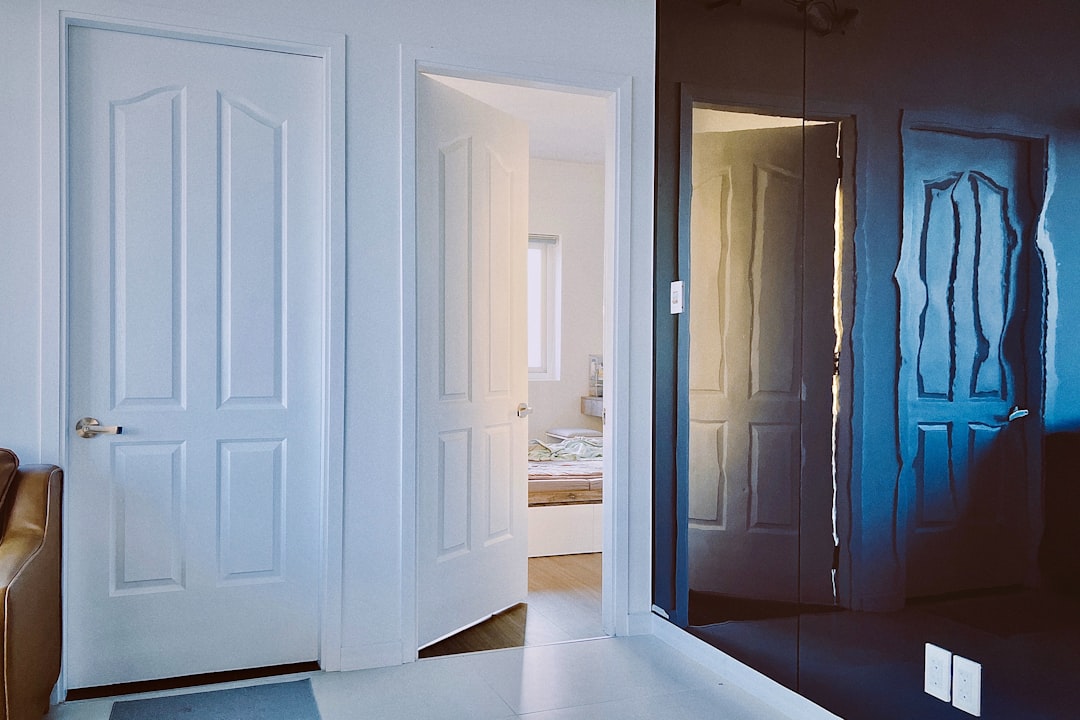
1) Hinged (swing) doors: the default workhorse
This is the “standard” interior door most people picture: a hinged slab, usually prehung (door already mounted in a jamb).
Typical uses: bedrooms, bathrooms, offices, pantries, and utility rooms.
2026 cost reality (estimates):
- Interior door installation commonly ranges $362–$1,233, with an average around $797 depending on type, material, and size. (Source: Angi, updated Mar 17, 2026: https://www.angi.com/articles/how-much-does-it-cost-install-interior-door.htm)
- A basic professional replacement/installation is often a 2–3 hour job, and Angi notes labor can be roughly 50% of total for many interior door installs. (Same source)
Key variables that swing price:
- Hollow-core vs. solid-core vs. solid wood
- Prehung vs. slab-only installation
- Paint-grade vs. stain-grade casing/trim
- Matching existing hinge/knob locations (retrofits) vs. fresh framing (new builds)
2) Bifold doors (closets and tight spaces)
Bifolds fold on a track and take less swing clearance.
Typical uses: bedroom closets, linen closets, laundry closets.
2026 installed cost (estimate):
- $100–$300 installed per door set is a common range cited for bifolds. (Source: Angi, 2026: https://www.angi.com/articles/how-much-does-it-cost-install-interior-door.htm)
Cost drivers:
- Track quality and alignment
- Opening width (single vs. double sets)
- Whether you upgrade to heavier, more rigid panels to reduce “racking” over time
3) Pocket doors (highly space-efficient, often underestimated)
Pocket doors slide into the wall cavity. They’re popular in modern plans and tight layouts—but they can increase framing and finish coordination.
Typical uses: bathrooms, pantries, laundry rooms, en-suites, home offices.
2026 installed cost (estimate):
- Pocket doors are often $800–$2,500 per door installed due to added labor and wall work. (Source: Angi, 2026: https://www.angi.com/articles/how-much-does-it-cost-install-interior-door.htm)
Why budgets blow up here:
- Wall must accommodate the pocket frame (and that wall can’t be packed with plumbing, wiring, or HVAC without planning)
- More finish carpentry, more “fuss factor” to get smooth glide and proper reveal
- Sound/privacy expectations often push homeowners toward solid-core slabs
4) Sliding doors (bypass) for closets and wide openings
Sliding bypass doors ride tracks and overlap.
Typical uses: reach-in closets, room dividers.
2026 installed cost (estimate):
- Labor/installation commonly lands around $250–$500 depending on configuration. (Source: Angi, 2026: https://www.angi.com/articles/how-much-does-it-cost-install-interior-door.htm)
Cost drivers:
- Track system quality
- Mirror panels vs. molded panels vs. custom
- Floor condition (tracks and guide alignment matter)
5) French doors (interior): beautiful, but not “standard”
Interior French doors typically come as pairs, often with glass lites.
Typical uses: office/study, dining room, formal living, flex rooms.
2026 installed cost (estimate):
- Interior French door installs can range $600–$6,000 depending on quality and scope. (Source: Angi, 2026: https://www.angi.com/articles/how-much-does-it-cost-install-interior-door.htm)
Why they vary so much:
- Glass type and muntin design
- Pair alignment and latch hardware complexity
- Trim detail expectations (especially in higher-end homes)
6) Barn doors (popular style; mixed performance)
Barn doors slide on a surface-mounted track. They can look great but don’t seal like a hinged door, so privacy and sound control are limited unless you upgrade.
Typical uses: pantries, laundry rooms, accent openings.
2026 installed cost (estimate):
- $200–$2,500 installed depending on door, track, and finish carpentry. (Source: Angi, 2026: https://www.angi.com/articles/how-much-does-it-cost-install-interior-door.htm)
Cost drivers:
- Heavy-duty track and soft-close upgrades
- Blocking/framing needed to support the track load
- Custom door slabs and specialty finishes
Interior door materials you’ll see in residential construction
Door “type” (pocket vs. hinged) is only half the story—material choices can swing the per-door budget significantly.
Angi’s 2026 pricing ranges for common interior door materials include (material only; installed totals vary widely by labor and finish scope):
- Hollow core: $30–$400
- Solid core: $70–$500
- Solid wood: $160–$590
- Aluminum: $300–$2,000
- Mirrored sliding door: $200–$2,300
(Source: Angi, 2026: https://www.angi.com/articles/how-much-does-it-cost-install-interior-door.htm)
For whole-house budgeting, solid-core upgrades are one of the most common “death by a thousand cuts” selections: not outrageous per door, but very noticeable across 15–25 doors once you include upgraded casing, paint, and hardware.
Common exterior door types used in residential construction
Exterior doors do more jobs at once: weather barrier, security, energy performance, and curb appeal. That’s why the price range is much wider.
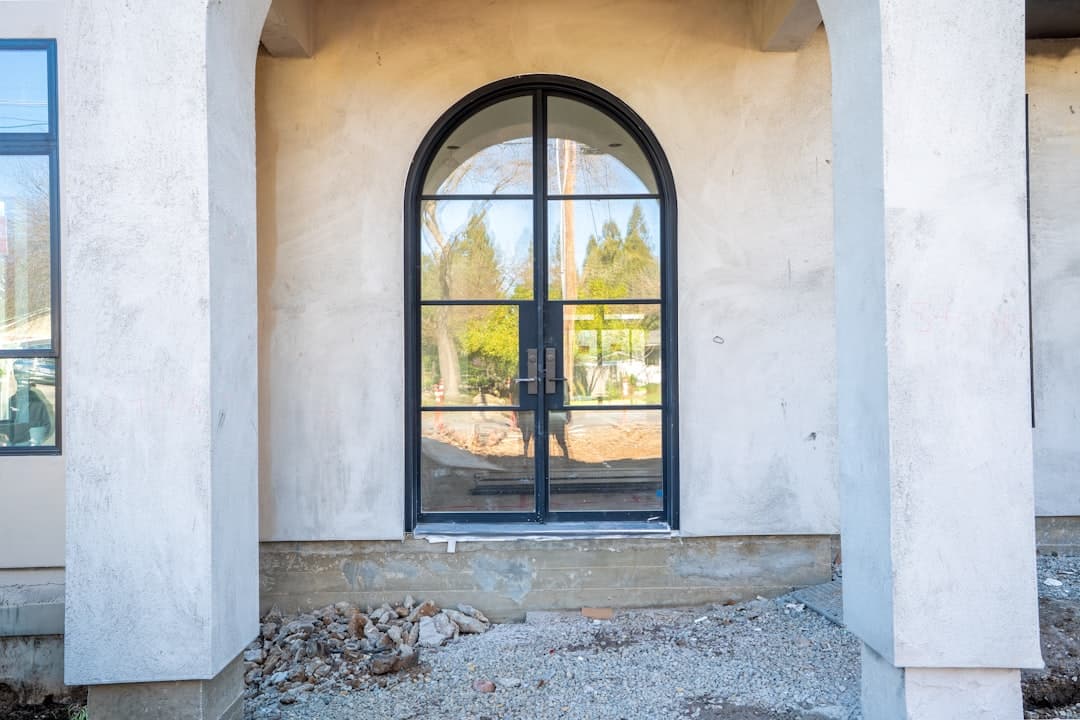
1) Front entry doors (prehung systems)
Most new construction uses prehung exterior doors: slab + frame + threshold, installed as a system for performance.
2026 installed cost (estimate):
- A standard prehung entry door replacement commonly falls around $1,200–$6,000+ installed, with higher totals for glass packages, sidelites/transoms, custom sizing, and premium hardware. (Source: Energy Home Improvements, Mar 25, 2026: https://energyhomeimprovements.com/blog/entry-door-replacement-cost-2026/)
- Their “good / better / best” budgeting ranges show how scope changes totals:
- Good: $1,200–$2,200 installed
- Better: $2,200–$3,800 installed
- Best: $3,800–$8,000+ installed
(Same source)
Upgrades that change the number fast (2026 estimate ranges):
- Decorative door glass: +$300–$1,800
- Sidelight (each): +$1,200–$2,800
- Transom: +$500–$1,200 (simple) or +$2,000–$6,500 (custom/large)
- Premium handleset + deadbolt: +$400–$1,200
- Smart lock add-on: +$250–$650
- Multipoint lock upgrade: +$600–$1,800
- Rot/rough-opening repairs: +$600–$2,500 typical, $3,000–$6,500+ severe
(Source: Energy Home Improvements, 2026: https://energyhomeimprovements.com/blog/entry-door-replacement-cost-2026/)
Even if you’re building new (not replacing), these “upgrade deltas” are still useful because they show what drives real-world bids: glass area, complexity, hardware, and finish carpentry.
2) Secondary exterior doors (service doors)
These include side entries, mudroom doors, rear entries, and basement walkout man doors. They’re often simpler than a “statement” front door, but still must be properly sealed.
Cost drivers:
- Door rating and durability (steel is common here)
- Overhang protection (weather exposure changes material preference)
- Security expectations and hardware grade
3) Garage-to-house door (fire-rated in many cases)
The door between an attached garage and the house often has special code requirements (commonly fire-resistance ratings and self-closing requirements depending on jurisdiction and adopted code editions). These doors can look like interior doors but behave like exterior assemblies in terms of sealing, durability, and compliance.
Cost drivers:
- Required rating and label compliance
- Self-closing hinges/closers
- Weatherstripping/threshold details when used as an exterior-like assembly
4) Patio doors: sliding glass vs. hinged French vs. multi-panel systems
Patio openings are one of the biggest “door” budget traps in modern plans—especially when you upgrade to oversized openings or multi-slide systems.
Typical options:
- Sliding glass door: common, efficient, generally lowest-cost option for wide openings
- Hinged French patio doors: traditional look; may require more swing clearance
- Multi-slide / stacking / lift-and-slide systems: high-end, large openings, premium hardware and installation precision
Cost drivers:
- Size (6' vs. 8' vs. 12'+ openings)
- Structural header requirements (engineering and framing labor)
- Tempered/laminated glass, impact requirements in wind-borne debris regions
- Interior/exterior trim packages and water management detailing
Why door costs vary so much from one house plan to the next
If you take nothing else away: doors aren’t priced “per door” in a vacuum. They are priced as part of a system that touches multiple trades.
Layout math: door count is a multiplier
A compact 1,600 sq ft plan might have 10–12 interior doors. A 3,200 sq ft plan with more rooms, a larger closet program, and multiple bathrooms can easily have 20+.
Even a modest upgrade (say, solid-core + upgraded hinges + nicer knobs) becomes a big budget shift when multiplied.
Finish level: trim, paint, and hardware often rival the slab cost
Angi lists interior trim installation at roughly $0.50–$1.50 per linear foot, with higher-end trim sometimes up to $5 per linear foot. (Source: Angi, 2026: https://www.angi.com/articles/how-much-does-it-cost-install-interior-door.htm)
That means a “door package” isn’t just doors—it's:
- casing profile selection
- baseboard and casing intersections
- paint or stain labor
- hardware upgrades (including privacy locks, passage sets, and specialty hinges)
Labor market: the same scope costs more in different places
Angi explicitly notes location affects interior door install cost, with some states averaging under $1,000 and others higher depending on cost of living and local conditions. (Source: Angi, 2026: https://www.angi.com/articles/how-much-does-it-cost-install-interior-door.htm)
In practice, city-level differences are driven by:
- carpenter availability and wage pressure
- union/non-union dynamics in certain markets
- scheduling (production builders vs. custom one-off builds)
Permits and inspections: sometimes doors trigger them
In new construction, doors are generally covered under the overall building permit. But in remodels—or in jurisdictions with strict wind/impact rules—door replacement can trigger a separate permit and inspection process.
For example, the City of Jacksonville, Florida lists window/door replacement fees including:
- $4.00 per $1,000 of construction cost (bid permit fee)
- $25.00 C&D fee per permit
- Minimum permit fee $80.00 (no inspection) or $150.00 (with one or more inspections)
(Source: City of Jacksonville fee schedule, Section 320.409: https://www.jacksonville.gov/departments/finance/city-fees)
That’s a great illustration of why estimates must be location-specific: the same door scope can have a different permitting pathway—and different minimums—depending on the city.
Site exposure and climate change the “right” door choice
- Coastal/wind zones: impact-rated assemblies can be required, and corrosion resistance matters
- Cold climates: air sealing quality and threshold details affect comfort and callbacks
- High UV/heat: darker finishes and certain materials may require higher-grade coatings or different material choices
A practical way to think about a door budget (2026 estimating framework)
When you see a plan, ask these questions before trusting any “average cost”:
-
How many doors are we actually buying?
Count interior swings, closet doors, specialty doors, and exterior units. -
What’s the scope: slab-only, or prehung, or full system?
Prehung is common in new construction; exterior should almost always be treated as a full system. -
What’s the trim and paint expectation?
“Builder grade” paint and casing is not the same scope as stain-grade woodwork. -
Where is the build located?
Labor markets and permit rules can change totals even with identical specs. -
Are there any “silent multipliers”?
Pocket doors, French doors, oversized patio openings, sidelites, custom heights (8' doors), and premium hardware packages.
Key Takeaways
Doors used in residential construction span a huge range of types—hinged, bifold, pocket, French, barn, sliding, and high-performance exterior systems—and the installed cost isn’t just about the slab. It’s about labor, trim, hardware, code/permit requirements, and how your specific plan uses doors throughout the layout.
In 2026, published cost data shows interior door installs commonly ranging $362–$1,233 (Angi), while entry door systems can run roughly $1,200–$6,000+ installed (Energy Home Improvements)—and both ranges can climb quickly with specialty doors, upgrades, and local conditions.
That’s why “per-door averages” are a starting point, not a budget.
Ready to price doors (and everything else) for your exact house plan?
If you’re realizing how many variables affect something as “simple” as doors, you’re thinking like an estimator—and that’s exactly the point. Two similar-looking house plans can land thousands (or tens of thousands) apart once you account for door counts, door styles, hardware tiers, finish carpentry, and local labor and permit rules.
Costtobuildahouse.com has been providing detailed, line-item cost-to-build reports for nearly 20 years, built around your specific plan and your specific location.
- First, Try a free demo report to see the level of detail you’ll get before you buy.
- When you’re ready, order your custom Cost To Build report for just $32.95 and get a location-specific breakdown you can actually use for budgeting and bid comparison.