In this article
Cost To Build A House Per Square Foot, Things To Be Careful About And Other Things To Consider. (2026)
If you’ve searched “cost to build a house per square foot,” you’ve probably seen a dizzying spread of numbers—$150/sq ft, $250/sq ft, $400/sq ft and beyond.
That’s not because people are “bad at estimating.” It’s because construction is a stack of interdependent variables: your plan, your lot, your local labor market, your codes, your finishes, your schedule, and even how far trucks have to haul materials. In 2026, those variables are still moving targets.
This guide will give you real, current 2026 benchmarks (with sources) and, more importantly, show you why “per-square-foot” is only a starting point—not a bid and not a budget.
2026 baseline: what “cost per square foot” usually means (and what it doesn’t)
When most people quote a cost per square foot, they’re typically talking about construction cost (sticks-and-bricks + labor + contractor overhead/profit) for a “typical” home in a “typical” location.
What that number often does not include (unless specified):
- Land purchase
- Major site development (blasting rock, steep slope work, long driveway, retaining walls)
- Utility extensions (water/sewer taps, septic/well, power runs)
- Landscaping, fencing, exterior structures
- Financing costs and interest carry
- Furnishings, window treatments
- Significant owner upgrades added after contract
So when you hear “$X per square foot,” your first follow-up question should be:
“Is that the house only, or the whole project?”
2026 estimated cost to build per square foot (U.S. ranges)
Here are reasonable 2026 estimates you’ll commonly see for a brand-new single-family home construction cost (excluding land), assuming a standard GC build and normal site conditions:
- Budget / basic finish: ~$150–$190 per sq ft
- Mid-range / “most custom builds land here”: ~$190–$275 per sq ft
- High-end custom: ~$275–$450+ per sq ft
Those are wide on purpose—because real projects are wide.
A published 2026 state-by-state analysis pegs a U.S. average around ~$162/sq ft, with reported state averages ranging roughly from ~$154/sq ft (Mississippi) to ~$230/sq ft (Hawaii) (estimates). Source: TXR AC “Average Home Construction Cost: 2026 State-by-State Analysis” (Mar 10, 2026) — https://www.txrac.com/blog/average-home-construction-cost
Use that as a baseline, not an answer. The same plan can swing 30–70% depending on the factors below.
Why your location can change the price more than your floor plan
1) Local labor costs (the “invisible” multiplier)
Construction labor isn’t one national number. It’s local, and it changes with:
- Population growth and building demand
- Union prevalence and prevailing wage rules
- Competition for trades (electricians, framers, finish carpenters)
- Seasonal labor availability
One way to see the direction of pressure is via construction indexes. As of April 2026, ENR Cost Data shows:
- National Construction Cost Index annual inflation: +2.6%
- National Building Cost Index annual inflation: +4.0%
- National Material Cost Index annual inflation: +5.9%
- Published wage figures include ~$50.46/hr (Construction Cost Index package) and ~$69.32/hr (Building Cost Index package) (index wage components; not your exact jobsite wage).
Source: ENR Cost Data, “National Indexes” (Apr 2026) — https://enrcostdata.com/cost-indexes
Why it matters: If your local labor market is tight, bids won’t just be higher—they’ll also include more contingency (because contractors fear getting squeezed by labor availability mid-build).
2) Material pricing (still volatile in 2026)
Materials don’t move together. Lumber can be down while cement is up, and steel behaves differently than engineered lumber or copper.
ENR Cost Data (Apr 2026) includes national material benchmark prices such as:
- Cement: ~$307.82/ton (12-month change shown as +13.0%)
- Steel: ~$126.46/cwt (12-month change +6.8%)
- Lumber: ~$848.96/MBF (12-month change +10.7%)
Source: ENR Cost Data (Apr 2026) — https://enrcostdata.com/cost-indexes
Important: Those are benchmark prices used for index tracking, not what your local yard will quote. But they clearly signal what builders feel: materials remain a meaningful swing factor.
3) City/county fees, plan review timelines, and permit complexity
Permits are not “just paperwork.” The cost and time can vary massively, and delays can turn into real dollars through:
- extended construction loan interest
- extended rentals or temporary housing
- contractor schedule changes
- remobilization costs
A 2026 homeowner cost guide reports building permit costs commonly ranging ~$525–$3,114, with an average around ~$1,688, and notes that large/complex projects (including new construction) can be significantly higher in some areas. Source: Angi, updated Mar 5, 2026 — https://www.angi.com/articles/how-much-does-building-permit-cost.htm
Also note: some jurisdictions charge permits based on valuation, square footage, or flat schedules, and some add separate fees (certificate of occupancy, technology fees, renewals, expediting, etc.).
The biggest cost drivers hiding inside “$___ per square foot”
Plan complexity (shape, roof, structure) can cost more than extra square footage
Two homes can both be 2,500 sq ft, but one is a “simple rectangle” and the other is a highly articulated layout with:
- multiple rooflines/valleys
- lots of corners and bump-outs
- large spans requiring engineered beams
- complex structural details (vaults, cantilevers)
- more exterior wall area (more framing, sheathing, insulation, siding)
A simpler plan often costs less per square foot because you’re buying more “easy” area.
Foundation type: slab vs crawlspace vs basement (and the soil decides too)
Foundation choice can swing costs significantly, and the local ground conditions can make it worse:
- Slab-on-grade can be cost-effective in many warm climates with stable soils.
- Crawlspaces add framing, ventilation, access, and sometimes insulation complexity.
- Basements add excavation, waterproofing, drainage, and potentially egress windows, plus structural needs.
Then come soil variables:
- high water table
- expansive clay
- rock ledge
- poor bearing capacity requiring piers or over-excavation
This is one reason per-square-foot pricing fails: the lot can be the project.
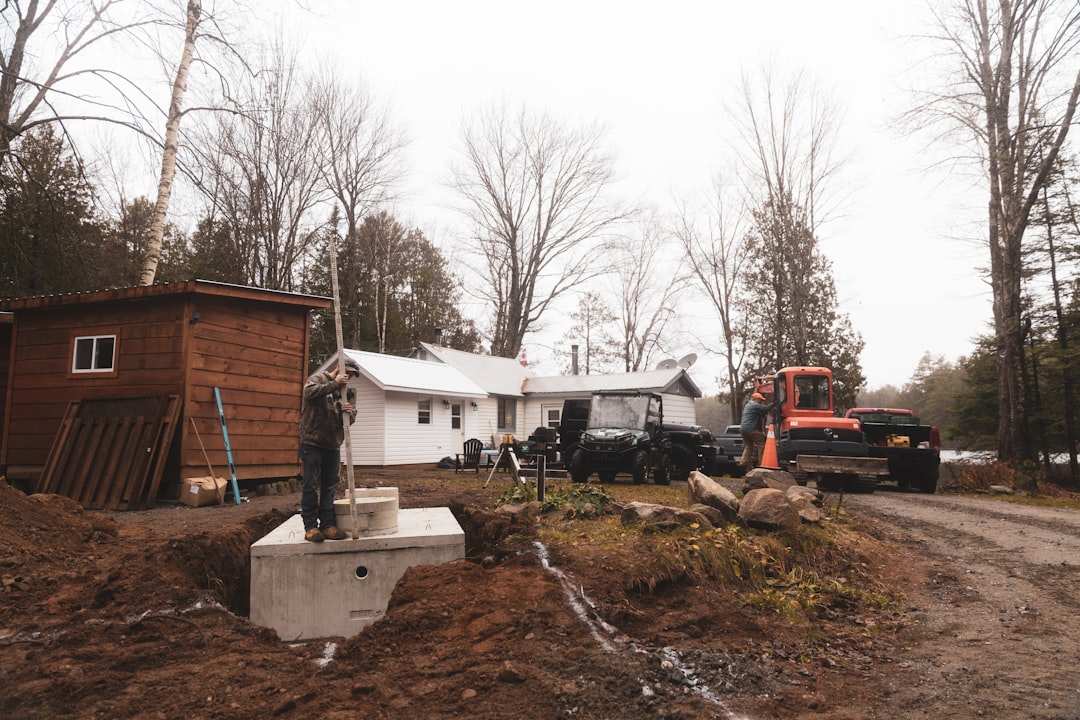
Site prep and utilities: the “budget blow-up” category
These items are often underestimated early because they’re not visible on a floor plan:
- clearing/grubbing, rough grading
- erosion control requirements
- long driveways and culverts
- retaining walls
- septic systems (or sewer tap fees)
- well drilling and water treatment
- bringing power to the house (distance-based)
- stormwater detention/management (common in many jurisdictions)
If you’re building outside an established subdivision, assume site and utility work will be one of the most variable line items.
Finishes and systems: where “mid-range” turns into “high-end” fast
Many budgets get strained not by one big upgrade—but by death-by-a-thousand-selections.
Common upgrade multipliers:
Kitchens and baths
- cabinet quality, custom vs semi-custom
- countertop material and thickness
- tile coverage (full height, shower niches, patterns)
- plumbing fixture brands/finishes
- glass enclosures and custom shower pans
Windows and exterior doors
- impact-rated assemblies (coastal/wind zones)
- upgraded glazing packages
- larger openings that require engineered headers
- multi-slide doors (structural + install complexity)
Mechanical, electrical, plumbing (MEP)
- higher-efficiency HVAC, zoning, dehumidification
- heat pumps vs gas (and electric service sizing)
- EV chargers, larger panels, smart home wiring
- whole-house generators
Tip: One of the safest ways to budget is to price your home as if you’ll choose the “middle” option, then check if your wish list is actually “upper-middle” or “high.”
Things to be careful about (the expensive mistakes)
1) Comparing “price per square foot” across different scopes
A builder might quote:
- house only (no driveway, no landscaping)
- house + basic site work
- turnkey (includes everything)
If you don’t align scope, you’re not comparing price—you’re comparing definitions.
2) Not specifying allowances clearly
Allowances (for cabinets, flooring, fixtures, lighting, etc.) are normal. The danger is when allowances are:
- too low for your expectations
- missing categories you assumed were included
- not tied to a spec list
Ask: “What allowance numbers are you using for each finish category?” and “What happens if we exceed them?”
3) Underestimating schedule risk
Delays aren’t just annoying—they cost money. Watch out for:
- long lead items (windows, cabinets, specialty doors)
- permit review cycles
- weather exposure (especially before dried-in)
- labor availability for specialized trades
4) Forgetting “soft costs”
Many real projects include:
- architecture/engineering
- surveys and soil tests
- energy reports / inspections
- lender requirements
- builder’s risk insurance
Even if your builder includes some of these, you want them called out so they don’t surprise you later.
5) Assuming your plan will price “normally” in your region
Plans are not region-neutral. A plan drawn for one climate may require changes elsewhere:
- snow loads (roof structure)
- wind/hurricane requirements
- seismic detailing
- frost depth foundations
- energy code compliance
Those changes affect both cost and buildability.
Other things to consider before you set a budget
Your square footage isn’t the whole story: cost per “conditioned” vs “total under roof”
Garages, porches, patios, and bonus rooms can blur the math. Two homes with the same conditioned area can have very different “under roof” totals—and that affects framing, roofing, concrete, and labor.
Remodeling the plan (even “small” changes) can ripple through trades
Moving a wall can change:
- foundation layout
- truss package
- plumbing runs
- HVAC duct design
- electrical plan
Design changes are often worth it—but they should be budgeted intentionally.
Builder pricing model matters
A fixed-price contract vs cost-plus arrangement changes how risk is shared. In volatile markets, some builders price higher to protect themselves; others use escalation clauses or allowances.
Key Takeaway: A realistic 2026 way to think about per-square-foot costs
- Per-square-foot numbers are not wrong—they’re just incomplete.
- In 2026, broad U.S. construction cost ranges often fall somewhere around ~$150 to $300+ per sq ft, and can run much higher for premium custom builds or difficult sites.
- Location alone can swing costs dramatically (state averages cited from roughly ~$154 to ~$230 per sq ft in one 2026 analysis), and materials + labor are still moving (ENR shows annual index changes of +2.6% to +5.9% as of Apr 2026 depending on category).
- The largest “gotchas” are usually site work, foundation/soil conditions, permits/fees/timelines, and finish selections—the items a simple square-foot number can’t see.
If you want a budget you can actually trust, you need a line-item estimate based on your exact plan and your exact location.
See a real line-item cost breakdown (free demo), then price your plan (custom report)
If you’re serious about building, it helps to see costs the way builders and lenders do: by trade and by component (foundation, framing, roofing, windows, HVAC, electrical, finishes, etc.)—not just one number per square foot.
costtobuildahouse.com has been providing detailed Cost To Build reports for nearly 20 years, and the goal is simple: give you a realistic, location-adjusted estimate so you can plan confidently before you commit.
- Start by exploring the free interactive sample: Try a free demo report
- When you’re ready, get pricing tailored to your plan and your build location for $32.95: order your custom Cost To Build report
Sources (2026 references used in this article)
- ENR Cost Data (BNP Media), Cost Indexes & benchmark material figures (Apr 2026): https://enrcostdata.com/cost-indexes
- Angi, “How Much Does a Building Permit Cost? [2026 Data]” (updated Mar 5, 2026): https://www.angi.com/articles/how-much-does-building-permit-cost.htm
- TXR AC, “Average Home Construction Cost: 2026 State-by-State Analysis” (Mar 10, 2026): https://www.txrac.com/blog/average-home-construction-cost