In this article
New Construction Plumbing Cost (2026)
If you’re trying to budget for a new build, plumbing is one of those “must work perfectly forever” systems that hides behind walls—until it doesn’t. And in 2026, new construction plumbing cost can swing widely based on your house plan, your foundation, local code, labor availability, and even how far your build is from the nearest supply house.
What most people want is a single number. What most people need is an explanation of why the number changes—and a line-item estimate that matches their plan in their location.
Below, we’ll walk through realistic 2026 cost ranges (with sources), then break down the variables that make plumbing one of the most plan-dependent trades in residential construction.
What does plumbing cost for a new house in 2026?
For a whole-house new construction plumbing scope (underground + rough-in + top-out + trim-out), many builders and estimators still sanity-check budget using cost per square foot, then adjust for the plan’s “plumbing intensity” (bath count, layout, stories, slab vs. crawlspace, etc.).
2026 rule-of-thumb ranges (estimates)
- $4 to $8 per sq. ft. is a commonly-cited planning range for new construction plumbing (national averages), with many “typical” homes clustering around the mid-range. (Source: Construct Estimates, updated Feb 23, 2026: https://constructestimates.com/how-to-estimate-plumbing-cost-for-new-construction/)
- $8,000 to $16,000 is a simple example range they give for a 2,000 sq. ft. home (same source).
- For bathroom rough-ins specifically (not the whole-house system), Angi shows a wide range: $3,000 to $20,000 per bathroom, with an “average” shown around $6,500 (Source: Angi, updated Mar 18, 2026: https://www.angi.com/articles/what-does-it-cost-run-new-plumbing-toilet-shower-and-sink-room-adjacent-other-bathroom.htm)
These ranges aren’t contradictory—they’re highlighting different scopes. A “$4–$8/sf” figure might assume a standard home with average fixture counts, while a single bathroom rough-in can spike if it involves long runs, a slab foundation, complex venting, or premium piping choices.
A quick size-based illustration (estimates)
Assuming $4–$8/sf for a “typical” new-build plumbing scope:
- 1,600 sq. ft.: ~$6,400 to $12,800
- 2,400 sq. ft.: ~$9,600 to $19,200
- 3,200 sq. ft.: ~$12,800 to $25,600
But here’s the catch: two different 2,400 sq. ft. homes can be separated by thousands (or tens of thousands) if one has:
- 3.5 baths + prep kitchen + laundry sink + wet bar + outdoor kitchen + multiple hose bibs, and
- a slab foundation with long trenching and a complex roof vent plan.
That’s why plumbing costs are better understood as a system design problem, not a square-foot problem.
What you’re actually paying for: the plumbing cost “buckets”
New construction plumbing typically breaks into phases and subsystems. If you’ve ever wondered why bids vary so much, it’s because contractors are pricing different assumptions inside these buckets.
1) Underground / “below slab” / site connections
This can include:
- Main water service line from meter/well to house
- Sewer lateral to municipal tap or septic tie-in
- Building drain under slab (if slab-on-grade)
- Sleeves, bedding, trenching, backfill, compaction (sometimes excluded—sometimes included)
- Cleanouts required by local code
If your site has rock, high water table, or strict inspection requirements, this phase can jump quickly.
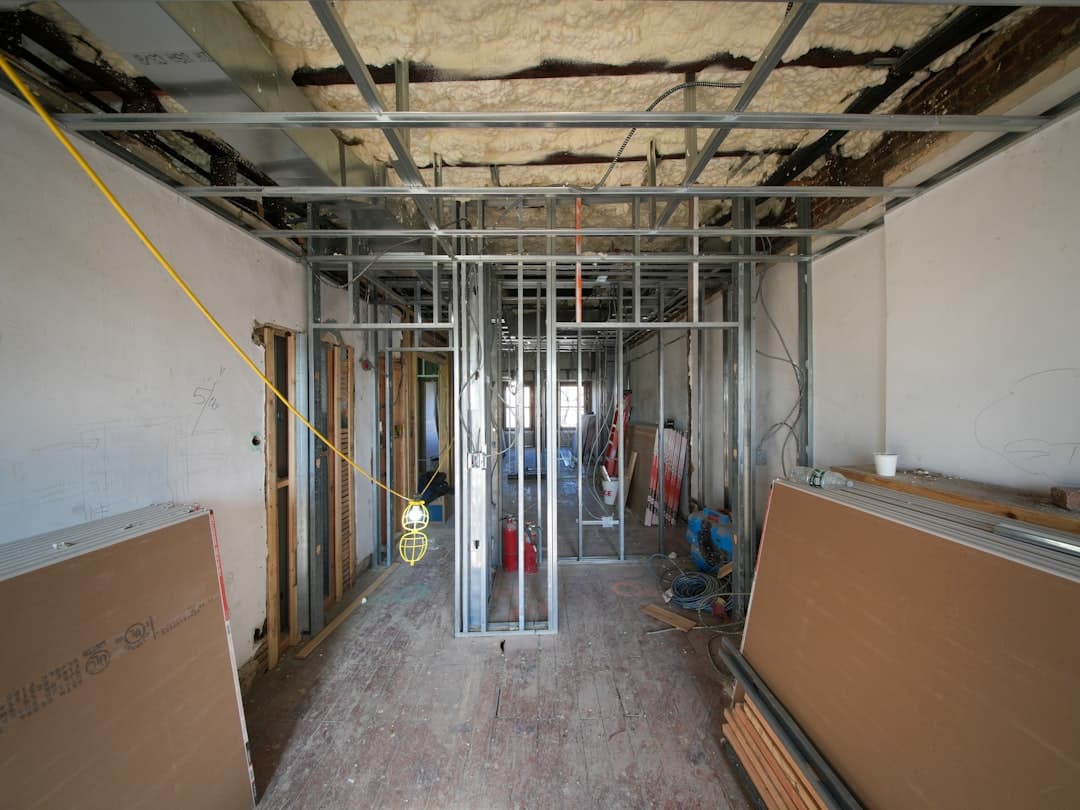
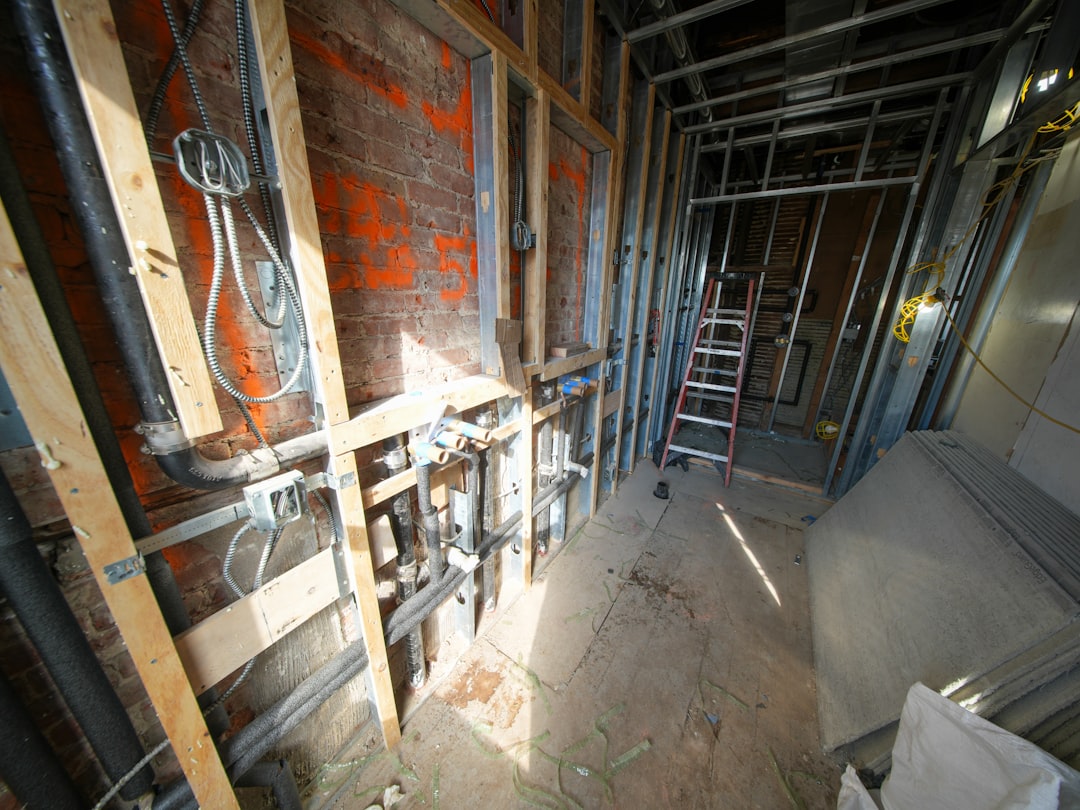
2) Rough-in (in walls/floors before drywall)
This phase usually includes:
- Water distribution lines (hot/cold)
- DWV (drain, waste, vent) piping and vent stacks
- Tub/shower valves, toilet flanges, stub-outs
- Gas piping (if included in plumber’s scope in your region)
Angi’s 2026 rough-in bathroom numbers illustrate how much variability exists even before fixtures go in. (Source: Angi link above.)
3) Top-out and testing
- Pressure testing (water)
- DWV testing and inspection sign-offs
- Roof penetrations, vent terminations
- Firestopping in penetrations (sometimes another trade, sometimes plumber)
4) Trim-out (fixtures + final connections)
This includes installing and connecting:
- Toilets, faucets, sinks, disposals
- Shower trims, tub trims
- Dishwasher and ice maker connections
- Water heater hookup (and sometimes the water heater itself)
Trim-out cost is where “finish level” matters. A wall-hung toilet, a luxury shower with multiple body sprays, or a recirculation pump can add real labor hours and parts.
2026 labor costs: why your zip code changes the price
Labor is often the largest swing factor in plumbing. Even when material costs are similar, installed price changes dramatically due to:
- local wage levels
- licensing requirements
- inspection burden
- market demand (how busy the trades are)
What plumbers charge (2026 ranges)
- Housecall Pro summarizes 2026 pricing: $45–$200/hour, with most residential work around $80–$130/hour; emergency work can run $150–$300/hour. (Source: Housecall Pro, posted March 2026: https://www.housecallpro.com/resources/marketing/how-to/how-to-price-plumbing-jobs/)
- BLS provides a grounding “wage reality” behind those billable rates: median pay $62,970/year ($30.27/hour) in May 2024 for plumbers/pipefitters/steamfitters. Contractor billable rates are higher because they include overhead, insurance, trucks, apprentices, supervision, and non-billable time. (Source: U.S. Bureau of Labor Statistics OOH: https://www.bls.gov/ooh/construction-and-extraction/plumbers-pipefitters-and-steamfitters.htm)
City-level reality (how it shows up in bids)
Even without quoting exact city wage tables, you’ll see consistent patterns:
- Higher-cost metros (parts of California, the Northeast corridor, Seattle-area, etc.) tend to land at the high end of hourly rates and per-fixture install pricing.
- Smaller metros and many rural markets may have lower hourly rates—but travel fees, limited crew availability, and longer scheduling can offset that.
In other words: “cheap labor market” doesn’t automatically equal “cheap installed plumbing,” especially if crews are scarce.
2026 material costs: pipes, fittings, and what “spec choices” do to budgets
Materials are rarely the biggest percentage of a plumbing bid, but they can be a big difference maker, especially when your plan has long runs, multiple manifolds, or premium selections.
Typical pipe material price ranges (estimates)
Construct Estimates lists common per-linear-foot material pricing (not installed):
- PEX: about $0.50–$1.50/ft (material range shown)
- Copper: about $3–$8/ft (material range shown)
(Source: Construct Estimates, updated Feb 23, 2026: https://constructestimates.com/how-to-estimate-plumbing-cost-for-new-construction/)
Angi provides installed rough-in pipe pricing (including labor) for a bathroom rough-in context:
- Copper: $4–$12 per linear foot (including labor)
- PEX: $1.50–$4 per linear foot (including labor)
- CPVC: $1.50–$3.25 per linear foot (including labor)
(Source: Angi, updated Mar 18, 2026: https://www.angi.com/articles/what-does-it-cost-run-new-plumbing-toilet-shower-and-sink-room-adjacent-other-bathroom.htm)
Why the same “house” can price differently by spec
A few examples of spec-driven cost jumps:
- Copper vs. PEX: copper typically costs more in both material and labor (more rigid routing, more joints/sweating/pressing).
- PEX-A expansion systems vs. crimp: faster installs and fewer fittings in some designs, but tool and fitting costs differ.
- Smart plumbing features: whole-house leak detection shutoff valves, pressure regulators, filtration/softeners, and recirculation lines add both material and coordination labor.
- Fixture quality: plumbing “trim” can vary from builder-grade to luxury with a $5,000+ difference per bathroom when you include valves, trims, specialty drains, and extras.
Foundation and layout: the hidden cost multiplier
Homeowners often underestimate how much plumbing is shaped by the foundation and the plan’s geometry.
Slab-on-grade vs. crawlspace vs. basement
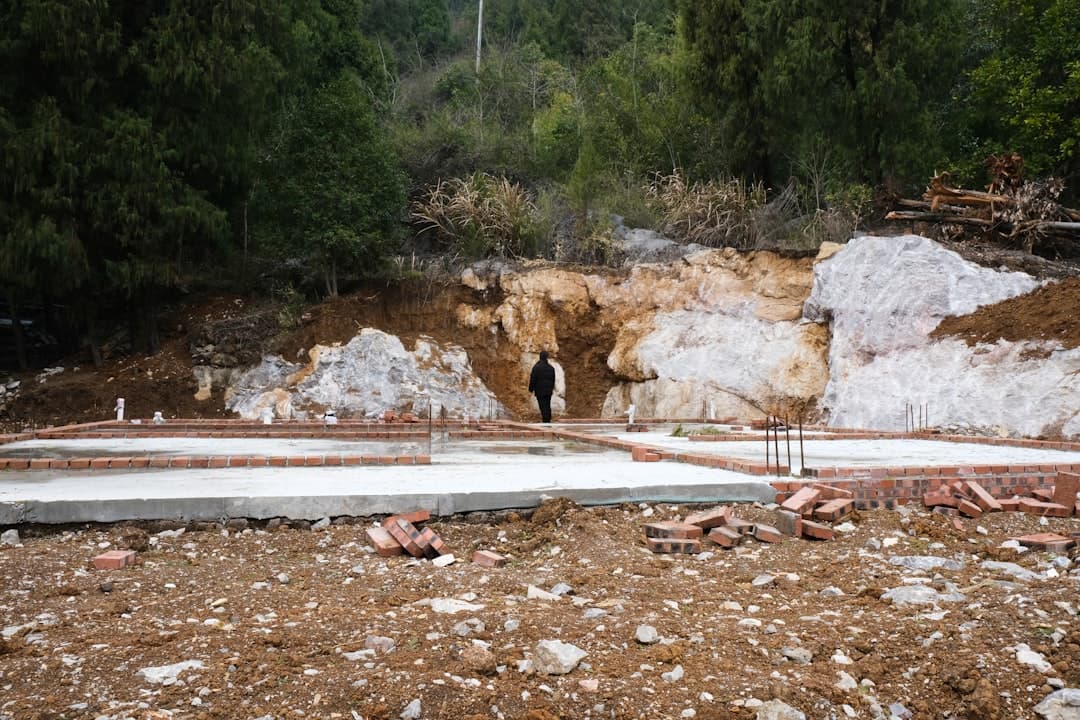
- Slab foundations can increase labor risk and cost because drain lines and many water lines must be placed accurately before concrete is poured. Mistakes are expensive. Repairs later may involve cutting concrete.
- Crawlspaces can reduce below-slab complexity but can introduce insulation/freeze protection requirements and access challenges.
- Basements may simplify some distribution but can require long vertical stacks, sump/ejector systems, or additional vent complexity.
“Plumbing stacking” and plan efficiency
Plumbing is cheaper when wet rooms align:
- Kitchen backs up to a bath wall
- Upstairs bath is directly above downstairs bath
- Laundry is near mechanical room
- Hose bibs and exterior features are kept “tight” to the system
Plumbing is usually more expensive when:
- Bathrooms are spread across the plan
- Primary suite is far from water heater
- Multiple stories require complex routing and venting
- Long runs require upsized piping or recirculation for acceptable hot-water wait times
Permits, inspections, and code: the costs you don’t see in a fixture showroom
Permits and inspections vary by jurisdiction, but they matter because they affect:
- direct fees
- required tests
- required materials (backflow preventers, cleanouts, pipe sizing rules)
- how many inspection trips the plumber must coordinate
Angi notes permit fees commonly $30–$500 for plumbing permits/rough-in/final permit needs in many areas, and also flags that local requirements can include separate rough-in and final inspection permits. (Source: Angi link above.)
The real budget risk isn’t usually the $150 permit—it’s the scope change driven by code:
- a required cleanout you didn’t plan for
- upsizing a building drain
- adding dedicated venting
- a required backflow device on irrigation or certain fixtures
- local seismic/strapping requirements for water heaters
Why “per bathroom” and “per fixture” numbers can mislead
It’s tempting to estimate plumbing by counting fixtures:
- 2 sinks, 2 toilets, 1 tub, 1 shower, 1 kitchen sink, 1 laundry hookup…
But fixtures don’t capture:
- pipe length
- vent routing difficulty
- number of wet vents vs. dedicated vents allowed
- foundation penetrations
- trenching/excavation
- local inspection steps
- whether gas piping is included in the plumber’s bid
- whether water service/sewer lateral is included or priced separately
Angi’s rough-in per fixture ranges are a good illustration of variability: a toilet rough-in alone can span from hundreds to thousands depending on conditions and complexity. (Source: Angi link above.)
A practical way to budget (without fooling yourself)
If you’re early in planning, you can create a “range budget” that’s honest about uncertainty, then tighten it once you’ve picked a plan and location.
Step 1: Start with a square-foot range (estimates)
Use $4–$8/sf as a starting point for many standard homes (Source: Construct Estimates link above).
Step 2: Apply plan complexity multipliers (estimates)
Consider adding:
- +10% to +25% for multi-story homes with baths spread out
- +10% to +30% for heavy plumbing plans (3+ baths, wet bar, prep kitchen, luxury primary shower)
- +10% to +20% for slab-on-grade risk/complexity (especially if layout changes are still likely)
Step 3: Add “site + utility connection” allowances
If your bid doesn’t clearly include:
- sewer tap/lateral
- long water service line
- trenching in rock/poor soil …you may need separate allowances or separate trade bids.
Step 4: Carry a contingency
Even estimator guidance commonly recommends 10%–15% contingency for plumbing surprises and changes during construction (Source: Construct Estimates link above).
Key Takeaway
New construction plumbing cost in 2026 isn’t a single number—it’s a moving target shaped by labor rates, foundation type, plan layout, fixture selections, local code, and site utility conditions. National averages like $4–$8 per sq. ft. can help you start a budget, but a bathroom rough-in alone can range $3,000–$20,000 depending on complexity, materials, and location. The only reliable way to avoid budget whiplash is to estimate plumbing as a line-item scope tied to your specific plan and jurisdiction.
See what a real line-item estimate looks like (free), then price your specific plan
If you’re at the stage where you’re comparing plans or trying to keep your build budget realistic, it helps to see costs broken out the way builders and lenders think about them—by trade, phase, and specification level.
- Start by exploring a free interactive sample so you can see exactly what you’d get: Try a free demo report
- When you’re ready, get pricing tailored to your house plan and your location—for $32.95: order your custom Cost To Build report
costtobuildahouse.com has been providing detailed cost-to-build reports for nearly 20 years, because “average costs” are rarely what you actually pay—your plan details and your local market decide the real number.