In this article
Free instant estimate · ~30 seconds
Quick Estimator
No sign-upRough planning range based on your inputs and current regional cost indices — not a quote. Your plan, lot, and selections move the number; the full report prices all 60+ items to your exact zip.
✓ Free — no sign-up · ✓ 60+ line items · ✓ ZIP-localized · ✓ Planning figures, not bids
Cost To Build A House In Kansas (2026)
If you’re trying to pin down the cost to build a house in Kansas in 2026, you’re going to see a frustratingly wide range of numbers—and for good reason. Two homes with the same square footage can land tens (or even hundreds) of thousands of dollars apart depending on where you build, the house plan’s complexity, the foundation, the finish level, your site conditions, and the local subcontractor market.
This guide is designed to do the opposite of a “one price per square foot” answer. Instead, it will show you why Kansas build costs vary so much—so you can make smarter decisions and understand why a plan-specific, location-specific line-item estimate is the only reliable way to budget.
Kansas house construction costs in 2026: realistic ranges (and why they’re so broad)
For a new single-family home in Kansas, a practical 2026 planning range for base construction (not land) often lands around:
- $140–$220 per sq ft for many “good standard” builds (builder-grade to mid-level finishes)
- $220–$300+ per sq ft for higher-end custom work, complex rooflines, masonry-heavy exteriors, and premium interiors
Those are “all-in build” style numbers people talk about—but they still hide a lot. Some “cost per sq ft” figures include permits and utility hookups; others don’t. Some include contractor overhead/profit; others assume you’re acting as your own GC.
One credible way to understand the structure-only component is to look at published cost manuals. The Craftsman 2026 National Building Cost Manual lists national-average square-foot costs by quality class and home size, plus location adjustment factors. For example, their Class 4 “Good Standard” single-family residence costs (national average basis) include overhead, profit, and permits within the construction scope (but exclude land and many site development items). They also provide Kansas location modifiers such as Kansas average -7%, Topeka -4%, and Wichita -5% (among others). Source: Craftsman Book, 2026 National Building Cost Manual (preview PDF).
https://craftsman-book.com/media/static/previews/2026_NBC_book_preview.pdf
Important: those modifiers are broad metro-area factors, not a substitute for a real estimate. Your subdivision’s soil, your builder’s backlog, your plan’s complexity, and your finish schedule can overwhelm the “city factor” quickly.
City and regional cost differences inside Kansas (Kansas City vs. Wichita vs. rural)
Kansas isn’t one construction market. Labor availability, subcontractor competition, inspection requirements, and material logistics vary a lot between:
- Kansas City metro (Johnson County, Wyandotte, etc.): typically stronger demand, tighter trades, and more finish-driven custom work.
- Wichita metro: large market with deep trades, but pricing still swings with new construction volume and specialty availability.
- Topeka / Manhattan / Lawrence: can trend differently depending on university-driven rental demand, local wage competition, and builder mix.
- Smaller towns and rural counties: sometimes lower labor pricing, but can be offset by fewer subcontractors, longer travel time, and delivery charges.
The Craftsman 2026 manual’s location modifiers underscore that variation at a high level (Kansas average -7%, Wichita -5%, Topeka -4%, with smaller markets sometimes lower). But the real regional driver in 2026 is often labor scarcity by trade, not just material costs.
Wondering what these ranges mean for your town? The free calculator above localizes them to your ZIP.
Get my Kansas estimate ↑What actually makes Kansas build costs vary so much?
1) The house plan itself (complexity costs money)
Square footage is only one variable. Two 2,400 sq ft homes can price very differently if one has:
- A simple rectangle footprint vs. multiple bump-outs and angles
- A standard gable roof vs. multiple hips/valleys/dormers
- 8-foot ceilings vs. 10–12-foot ceilings and tall cabinetry
- Standard window package vs. oversized glass walls
- A straightforward mechanical layout vs. long duct runs and multiple zones
In cost manuals, “shape complexity” is significant enough that it’s built into how costs are categorized (for example, homes with more corners/masses typically cost more per sq ft).
2) Foundation type and soil conditions (Kansas is not uniform)
Kansas builders commonly use slab-on-grade, crawl space, or basements depending on region, frost depth expectations, and buyer preference.
From the Craftsman 2026 manual’s “Additional Costs,” residential basements (including stairs) are shown as about $22–$36/sq ft unfinished and $38–$46/sq ft finished for larger basements (with higher ranges for smaller ones). Source: Craftsman 2026 manual.
https://craftsman-book.com/media/static/previews/2026_NBC_book_preview.pdf
But real jobs often diverge due to:
- Expansive or highly variable soils
- High groundwater
- Steep lots requiring tall foundation walls
- Extra engineering and reinforcing
- Haul-off and import fill needs
Site-specific soil and grading can be one of the biggest “surprise” multipliers in Kansas budgeting.
3) Finish level (the biggest variable after site work)
Finish selections can move totals dramatically:
- Flooring (LVP vs. hardwood)
- Cabinets (stock vs. semi-custom vs. custom)
- Countertops (laminate vs. quartz vs. stone)
- Tile (basic shower surround vs. full custom tile)
- Lighting and electrical (standard packages vs. layered lighting, smart home wiring)
- Exterior finishes (vinyl vs. fiber cement vs. masonry accents)
This is why “average cost per sq ft” answers are dangerous: finishes don’t scale linearly with square footage.
4) Labor costs and trade availability in 2026
Even if materials stabilize, build costs can climb (or stay elevated) because labor is tight. National wage benchmarks from the Bureau of Labor Statistics help frame the baseline environment. For example, BLS lists May 2024 median annual wages of $62,970 for plumbers/pipefitters/steamfitters (national). That’s not Kansas-specific, but it does show why mechanical trades are expensive and why shortages matter. Source: BLS Occupational Outlook Handbook.
https://www.bls.gov/ooh/construction-and-extraction/plumbers-pipefitters-and-steamfitters.htm
In Kansas, the practical impact is:
- scheduling delays (which create carry costs)
- higher bid spreads between subcontractors
- more change-order exposure when scopes aren’t defined clearly up front
5) Permits, plan review, and local fees (often underestimated)
Permit structures vary by jurisdiction. For example, Johnson County, Kansas indicates:
- Plan review fee for all residential projects: $50
- Plan review for new single-family dwellings: $100
…and directs users to a residential permit fee chart based on valuation. Source: Johnson County KS Building Codes.
https://www.jocogov.org/department/building-codes/building-permit-fee-chart
The key point isn’t that the plan review is $100—it’s that local valuation-based fee schedules, inspections, and add-on requirements can change your soft costs and timelines. Some cities also have separate fees for utilities, stormwater, driveway approaches, right-of-way work, and more.
6) Utilities and “site development” (not the house, but required to build it)
Many people ask, “What does it cost to build?” but the real budget question is:
What does it cost to build this house plan on this lot in this jurisdiction?
Site development commonly includes:
- Clearing, grading, erosion control
- Temporary power/pole, jobsite water
- Trenching for water, sewer/septic, gas, electric
- Storm drainage requirements in some subdivisions
- Driveway, culverts (rural), sidewalks (urban)
- Rock excavation or unsuitable soil remediation
These can be modest on a flat, serviced suburban lot—or enormous on acreage with long utility runs.
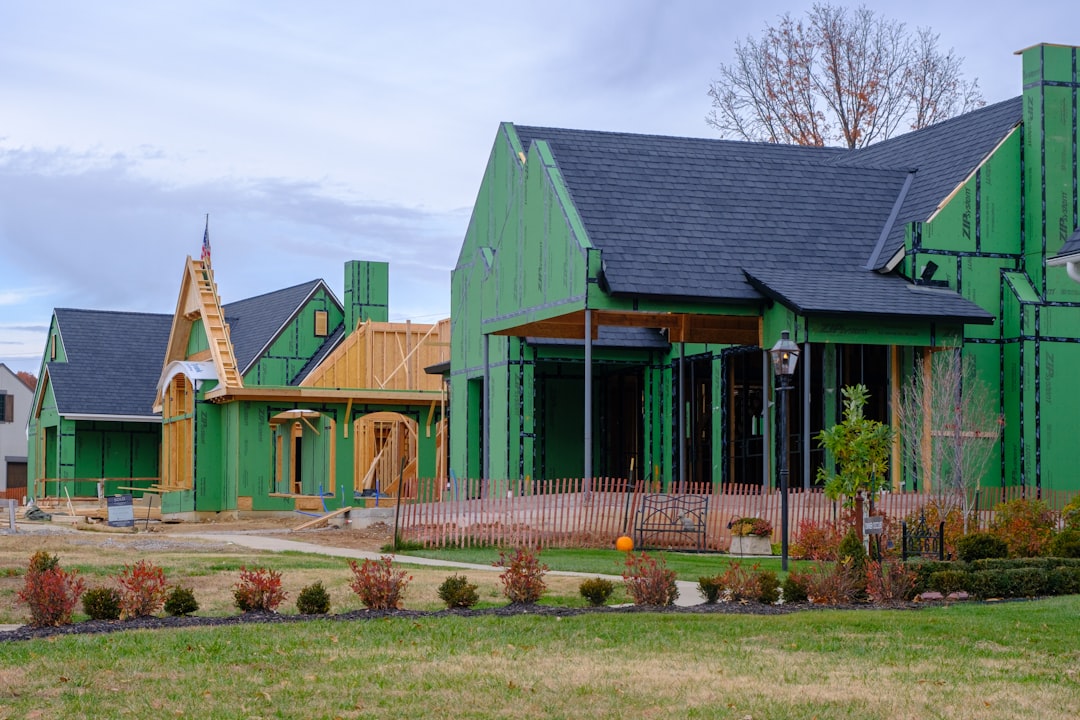
Example budgets: same size, different outcomes (Kansas 2026)
Below are illustrative planning scenarios to show how quickly totals separate. These are not quotes—just realistic “what could happen” ranges.
Scenario A: 2,000 sq ft slab-on-grade, builder-grade finishes (typical suburban lot)
- Base construction: $150–$190/sq ft → $300,000–$380,000
- Site/utility variability: $10,000–$35,000
- Permits/fees (varies): $2,000–$10,000+
- Contingency: 3%–8%
Planning total (excluding land): ~$320,000–$440,000
Scenario B: 2,400 sq ft with basement, mid-level finishes, some complexity
- Base construction: $175–$235/sq ft → $420,000–$564,000
- Basement (unfinished vs. finished portions): can add $30,000–$90,000+
- Site/utility variability: $15,000–$60,000
- Permits/fees: $3,000–$12,000+
Planning total (excluding land): ~$470,000–$720,000
Scenario C: 3,200 sq ft custom, premium finishes, complex rooflines, higher-end market
- Base construction: $240–$320+/sq ft → $768,000–$1,024,000+
- Site work (often larger lots / more improvements): $25,000–$150,000+
- Higher HVAC/electrical complexity + premium window packages: major multipliers
Planning total (excluding land): ~$820,000–$1,250,000+
The point is not the specific number—it’s that Kansas pricing in 2026 is plan-driven and site-driven more than most people expect.
A more useful way to think about “cost per square foot”
Instead of asking, “What’s the Kansas cost per square foot?”, ask:
- What quality level am I building? (minimum / average / good / semi-custom / luxury)
- How complex is the footprint and roof?
- What foundation and how much excavation?
- What finish schedule am I choosing? (cabinets, flooring, tile, windows, doors)
- What is my lot like? (slope, soil, utilities, drainage requirements)
- What city/county am I in? (permit structure, inspection process, fees)
- Who is building it and when? (labor availability, builder backlog, seasonal conditions)
That’s how professionals estimate—by scope, not by averages.
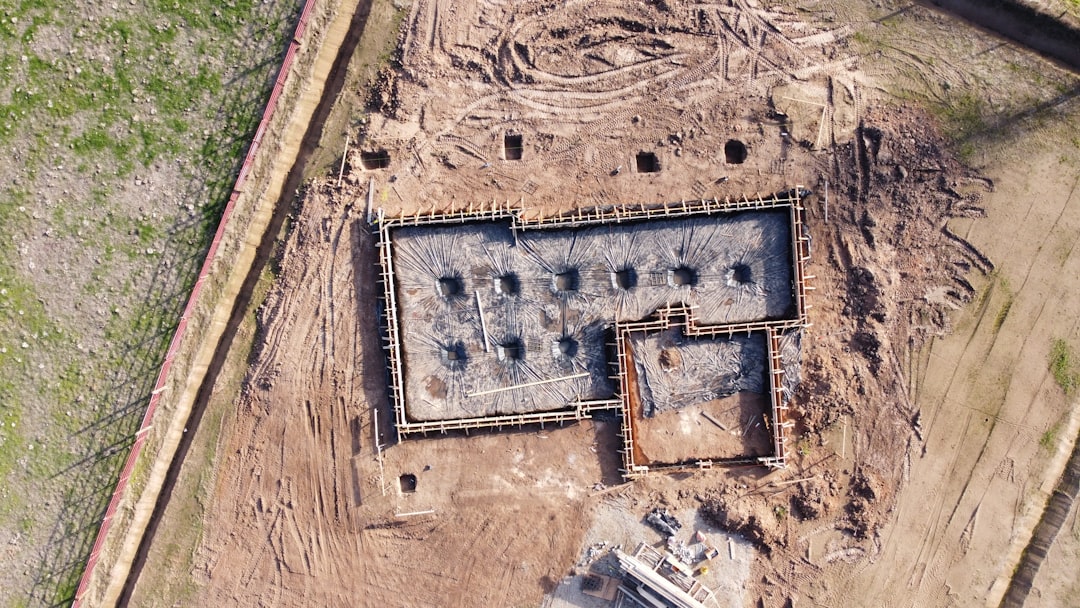
Key cost drivers Kansas homeowners miss most often
Mechanical systems (HVAC, plumbing, electrical)
The mechanical scope is where “small upgrades” turn into big money:
- extra bath additions
- larger service panels
- EV charging circuits
- multi-zone HVAC
- moving mechanical rooms because the plan “looks better”
Windows and exterior envelope upgrades
Energy and comfort expectations keep rising. A window upgrade can be one of the largest line items that still feels invisible on paper until bids arrive.
Garage size and door count
A 2-car vs. 3-car garage isn’t a small difference—especially if it changes roof structure and foundation footprint.
Change orders
If you don’t lock specifications early, you’re exposed to:
- allowances that are too low
- upgrade creep
- scheduling delays that create additional costs
Key Takeaway
Kansas home construction costs in 2026 are best understood as a range of ranges—because the final price depends heavily on your exact house plan, exact location, lot conditions, and finish selections. A “$X per square foot in Kansas” answer can be off by a huge margin if your plan has a basement, complex geometry, premium windows, or if your lot requires significant site work and utility runs.
If you want a budget you can actually plan around, you need a detailed line-item estimate built around your plan and build location—not a statewide average.
See your real numbers: free demo + a plan-specific report (helpful next step)
If you’re serious about building in Kansas, the most helpful next move is to look at a real line-item report so you can see where the money actually goes (foundation, framing, MEP, finishes, permits, and more).
- Try a free demo report to interact with a sample and see exactly what you’d get before spending anything: Try a free demo report
- When you’re ready, order your custom Cost To Build report for your specific house plan and Kansas location for just $32.95: order your custom Cost To Build report
Costtobuildahouse.com has been providing cost-to-build reports for nearly 20 years, and the entire point is to replace guesswork with a clear, buildable budget tailored to your plan.