Curious what it would cost to build in your area? We produce line-item estimates by ZIP code, plan size, and finish level — from nearly 20 years of construction data.
By Rob Mackle, Founder & Lead Cost Estimator · Updated July 11, 2026
Metal Roofing Comparison | Exposed Fastener vs Standing Seam Metal Roof
New Home Construction
Metal Roofing Comparison
Exposed Fastener vs Standing Seam Metal Roof
Both are durable, long-lasting metal roofing systems for new homes. The right choice depends on your budget, style preferences, and performance priorities.
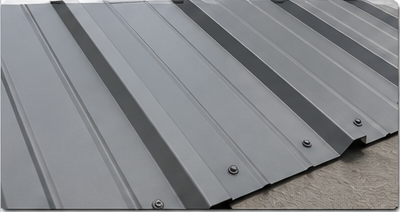
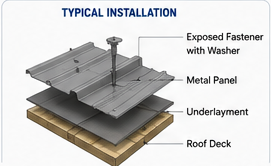
Exposed Fastener Metal Roof Screws are visible on the surface of the panels.
Overview
Panels are fastened to the roof deck with screws that are visible on the surface. This is the most common and economical metal roofing option.
Common Uses
Garages, workshops, barns, and outbuildings
Residential roofs (budget-friendly)
Panel Profile Examples
Advantages
Lower material and installation cost
Quick and easy installation
Wide variety of colors and profiles
Readily available
Lightweight and durable
Considerations
Screws are exposed to the elements
Higher chance of leaks if screws loosen or washers degrade
More maintenance over the long term
Less premium appearance
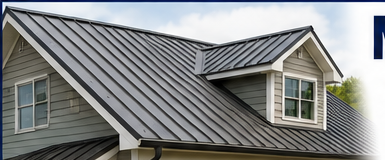
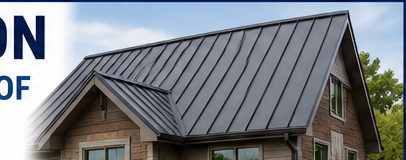
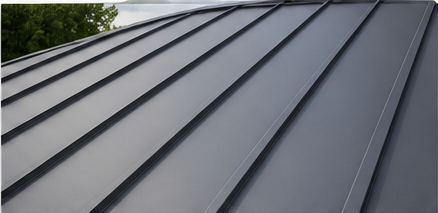
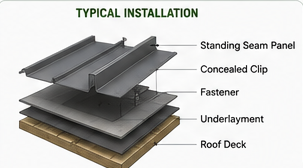
Standing Seam Metal Roof Fasteners are hidden under the seams for a clean, modern look.
Overview
Panels interlock at the seams and are fastened to the roof deck with clips and screws that are hidden. This system offers superior weather protection and a sleek, premium appearance.
A free, grouped preview. Your full report breaks each of these into line items with labor + materials.
Foundation (all types & garage slab)$55,000
Framing rough shell$98,500
Dry-out shell$66,000
Mechanicals (electrical / plumbing / HVAC)$82,000
Finish shell$120,500
Cabinets & vanities$44,000
Everything else$82,000
Your full line-item report19 sections · 60+ items · labor + materials, locked
General soft costs
Plans / architect / modifications$0,000$0,000
Engineering$00,000$00,000
Building permit / impact fees$0,000$000
Pre-construction services$00,000$0,000
Sitework & utilities
Site work$000$0,000
Water / well$0,000$00,000
Sewer / septic$0,000$0,000
Electric / phone / cable$00,000$00,000
Gas / oil$0,000$000
Driveway$00,000$0,000
Temp facilities / power$000$0,000
Foundation
Foundation (all types & garage slab)$0,000$00,000
Framing rough shell
Framing rough shell$0,000$0,000
Fireplace$00,000$00,000
Balconies, decks, porches & other$0,000$000
Finish basement / bonus room$00,000$0,000
Roofing
Roofing$000$0,000
Gutters$0,000$00,000
Dry-out shell
Exterior doors$0,000$0,000
Windows / sliders / French doors$00,000$00,000
Siding$0,000$000
Garage doors$00,000$0,000
Electrical
Electrical$000$0,000
Electrical fixtures$0,000$00,000
Plumbing
Plumbing$0,000$0,000
Plumbing fixtures$00,000$00,000
Fire proofing$0,000$000
HVAC
HVAC$00,000$0,000
Insulation
Insulation$000$0,000
Finish shell
Drywall$0,000$00,000
Interior doors and trim$0,000$0,000
Stairs$00,000$00,000
Shower doors / mirrors / accessories$0,000$000
Cabinets & vanities
Cabinets & vanities$00,000$0,000
Kitchen counter & vanity tops$000$0,000
Appliances$0,000$00,000
Painting
Painting — interior$0,000$0,000
Painting — exterior$00,000$00,000
Flooring
Flooring$0,000$000
Special equipment
Special equipment needs$00,000$0,000
Contractor / project manager
StartBuild construction services$000$0,000
Project manager fee$0,000$00,000
General contractor fee$0,000$0,000
Land & financing
Land payoff$00,000$00,000
Interest reserve$0,000$000
Contingency reserve$00,000$0,000
Closing costs$000$0,000
Get your exact cost to build — $34.95
Priced to your plan, zip, and foundation. Adjust any line, then export to PDF or Excel.
Ready in ~2 business days 60 days of edits Human-reviewed
Rough planning range based on your inputs and current regional cost indices — not a quote. Your plan, lot, and selections move the number; the full report prices all 60+ items to your exact zip.
✓ Free — no sign-up · ✓ 60+ line items · ✓ ZIP-localized · ✓ Planning figures, not bids
Every home is different. A Cost To Build report gives you a line-item breakdown for your specific ZIP code, plan size, and finish level — from a company with nearly 20 years of construction cost data.