In this article
Cost To Build A House In Hawaii (2026)
If you’re trying to pin down one number for the cost to build a house in Hawaii, you’ll quickly run into a frustrating reality: Hawaii construction pricing is less like a single price tag and more like a moving target—shaped by island logistics, labor availability, design choices, site conditions, and permitting.
In 2026, Hawaii remains one of the most expensive places in the U.S. to build—yet even within the state, the range between a straightforward build on Oahu and a complex custom home on a steep Maui lot can be enormous.
This guide is designed to do the opposite of most “average cost” articles. Instead of pretending there’s a simple answer, we’ll break down why costs vary so widely, what current 2026 data says, and how to think about budgets in a way that matches how builders and lenders actually estimate projects.
Free instant estimate · ~30 seconds
Quick Estimator
No sign-upRough planning range based on your inputs and current regional cost indices — not a quote. Your plan, lot, and selections move the number; the full report prices all 60+ items to your exact zip.
✓ Free — no sign-up · ✓ 60+ line items · ✓ ZIP-localized · ✓ Planning figures, not bids
What “cost to build” should (and shouldn’t) include
Before looking at numbers, make sure you’re comparing the same scope. Homebuilding costs are often quoted as:
- Hard costs (construction cost): labor + materials for the structure and systems (foundation, framing, MEP, finishes, etc.)
- Soft costs: architecture/engineering, surveys, testing, insurance, financing costs, and other professional services
- Permits, impact fees, and utility connections: can be substantial in Hawaii depending on location
- Site work: clearing, excavation, grading, retaining walls, drainage, driveway, and sometimes shoreline/erosion work
- Land: not included in most construction estimates
Two people can both say “it cost $500/sf to build” while one includes only the builder’s contract and the other includes design, permitting, site work, and solar—so always ask what’s included.
2026 baseline construction cost ranges in Hawaii (why the spread is so wide)
A useful starting point is Hawaii’s position relative to national cost indexes. Rider Levett Bucknall (RLB) tracks a Comparative Cost Index by city and reported that Honolulu’s index rose 5.89% year-over-year as of January 2026—above the national average in their report. That matters because even if your design stays the same, the market price of building shifts over time due to labor and materials pressure.
Source: RLB Quarterly Construction Cost Report Q1 2026 (Honolulu annual % change; Hawaii commentary).
Another key data point: RLB’s indicative construction costs for Honolulu single-family residential show a very broad hard-cost range of roughly $345 to $645 per square foot (USD, “hard construction costs”), with the important caveat that costs vary by site conditions, specs, and market factors.
Source: RLB Quarterly Construction Cost Report Q1 2026 (Indicative Construction Costs table; Honolulu single-family low/high).
That range alone explains why “average cost” articles can mislead. A 2,000 sf home at $345/sf is ~$690,000 in hard costs. The same size at $645/sf is ~$1,290,000—before land, design, permits, and site development.
A practical “budget bands” way to think about Hawaii build costs (estimates)
Below is a planning-only way to frame the range. These are 2026 estimates meant to show variability, not a quote:
- Basic to mid-range build: ~$350–$500/sf hard cost
(simpler footprint, standard structural design, moderate finishes, easier site) - Upper mid-range: ~$500–$700/sf hard cost
(more glazing, higher-end finishes, more complex rooflines, elevated wind/structural detailing) - Custom/high-end: ~$700–$1,000+/sf hard cost
(architectural custom, premium systems/finishes, challenging sites, specialty details)
Where your project falls depends less on square footage than on what you’re building and where you’re building it.
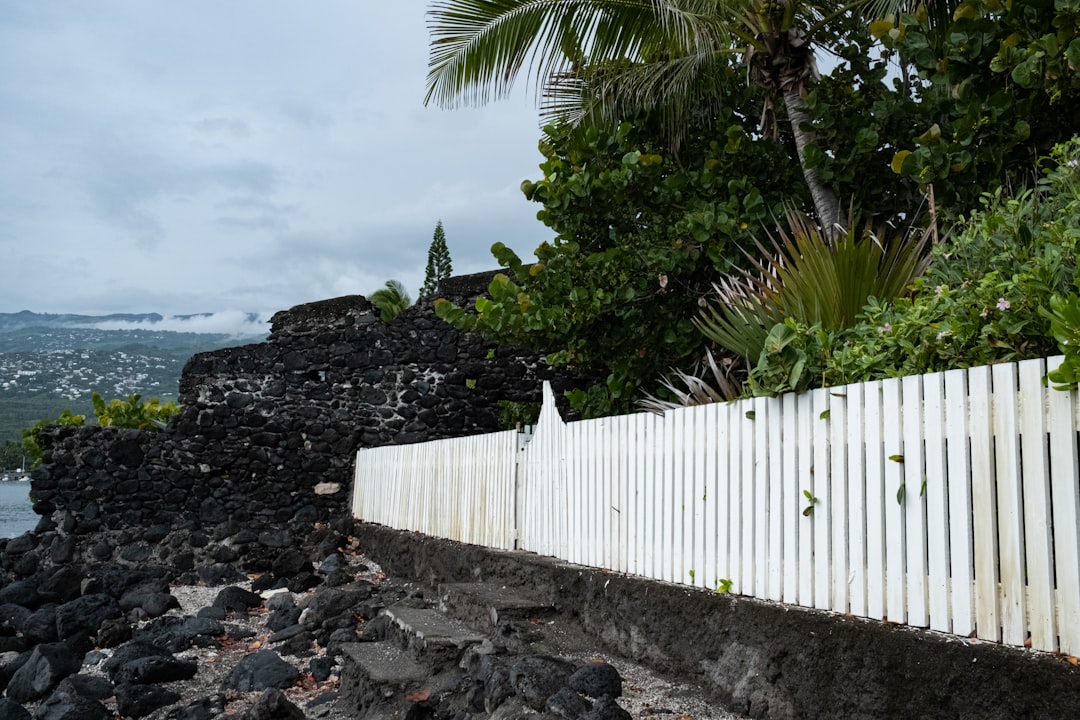
Wondering what these ranges mean for your town? The free calculator above localizes them to your ZIP.
Get my Hawaii estimate ↑Hawaii regional variation: Oahu vs Maui vs Big Island vs Kauai
Even within Hawaii, the construction market is not uniform. Pricing differences often come from:
- Labor availability and scheduling
- Material staging, shipping, and inter-island transport
- Subcontractor depth (how many qualified crews exist for your scope)
- Site accessibility (tight streets, steep driveways, crane needs, limited laydown space)
- Post-disaster and recovery-driven demand that keeps certain trades booked out
RLB’s narrative for 2026 notes Hawaii’s “geographic isolation” and “constrained labor availability,” with continued activity influenced by recovery efforts following the 2023 Maui wildfires. Those conditions tend to affect both pricing and timelines—especially on islands where labor pools are smaller.
Source: RLB Hawaii Q1 2026 insight page (market commentary).
City and county-level cost differences (how they show up in your estimate)
You’ll often see these differences appear in very specific line items:
- Concrete and masonry: batch plant proximity, trucking time, and pumping complexity
- Framing and trusses: procurement timelines and crane time
- Roofing: wind-rated assemblies and availability of crews
- MEP (mechanical/electrical/plumbing): specialized labor, inspection availability, and material lead times
- Site work: grading/rock, drainage, and retaining walls (especially on hillsides)
This is why two “similar” homes can price differently when one is on a flat infill lot in Kapolei and the other is on a steep lot above Kona with lava rock excavation and a long utility run.
Labor costs in Hawaii are structurally high in 2026
One of the clearest reasons Hawaii costs are elevated: labor is expensive, and it’s not just the hourly wage—fringe benefits and specialty pay matter too.
Hawaii’s Department of Labor & Industrial Relations publishes prevailing wage schedules for public works, which give a concrete look at market wage pressures. In Wage Rate Schedule Bulletin No. 510 (Feb 16, 2026), examples include:
- Journeyman Carpenter (Form/Framer/Rough/Finish): $85.24/hr total prevailing wage (made up of $55.50/hr base + $29.74/hr fringe)
- Laborer I: $69.66/hr total prevailing wage ($42.85/hr base + $26.81/hr fringe)
Source: State of Hawai‘i DLIR, Research & Statistics Office, Wage Rate Schedule Bulletin No. 510 (Feb 16, 2026).
Important context: prevailing wage is for covered public construction, not automatically your private residential project—but it’s a strong indicator of the labor environment. Even on private builds, subcontractors compete for crews, and wage pressure shows up in bids.
Why wage rates don’t translate directly into your per-square-foot cost
A carpenter rate doesn’t mean your house uses a set number of carpenter-hours per square foot. Productivity changes dramatically with:
- multistory vs single-story
- complexity of details (tile patterns, trim packages, waterproofing)
- access and staging (tight lots, no material storage)
- wind-rated and corrosion-resistant detailing
- inspection timing and rework due to plan changes
This is why plans and specs (not just size) determine the real cost.
Materials and logistics: the “Hawaii premium” isn’t one line item
Mainland pricing assumptions often break down in Hawaii because delivered cost depends on shipping, handling, storage, and timing.
RLB’s Q1 2026 report discusses renewed materials pressure from tariffs and material pricing volatility (not Hawaii-specific in that section), and Hawaii is especially sensitive because so many materials are imported and must be scheduled earlier.
Source: RLB Quarterly Construction Cost Report Q1 2026 (market commentary; materials/tariffs discussion).
In practical terms, logistics can affect:
- framing lumber and engineered wood
- rebar and structural steel
- windows/doors (especially impact/wind-rated or custom sizes)
- HVAC equipment and electrical gear
- tile, cabinetry, and specialty finishes
A big driver of budget overruns is not only price—it’s substitutions and delays. If a specified window package slips 10–14 weeks, you may pay more for temporary protection, remobilization, or schedule compression.
Permits, code, and design requirements that can add real cost
Hawaii’s climate and risk factors influence construction detailing in ways that affect cost:
- High wind exposure in coastal and ridge areas can require upgraded connectors, sheathing schedules, and roof assemblies.
- Corrosion resistance matters near salt air; some hardware and fasteners may be upgraded.
- Termite protection strategies and inspections.
- Waterproofing in wet zones and hillside drainage planning.
- Energy requirements and local expectations for solar, water heating, and ventilation strategies (varies by jurisdiction and project goals).
On paper, two houses might share the same square footage—but once one adds more glazing, a complex roof, exterior decks, and upgraded waterproofing, the cost profile changes quickly.
Site work: the cost category most likely to surprise Hawaii homeowners
If you’re building in Hawaii, site work can be the difference between a “reasonable” build and a budget that jumps by hundreds of thousands.
Common high-impact site conditions include:
- Steep slopes requiring retaining walls
- Rock excavation (including lava rock on the Big Island)
- Soil stabilization and drainage
- Limited access for equipment
- Long driveways, private roads, or shared access easements
- Utility trenching distance (water, sewer/septic, electric, telecom)
Site costs are also highly sensitive to what your plan demands. A split-level home designed for a slope can be cheaper than forcing a flat-pad design that needs major walls and import/export.
How plan choices move your cost more than square footage
Square footage matters, but cost per square foot is often driven by “cost concentration.” Smaller homes can have higher $/sf because kitchens, bathrooms, and mechanical systems don’t shrink proportionally.
Here are plan-level decisions that swing costs fast in Hawaii:
Foundation and structure
- Slab-on-grade vs post-and-pier vs stem wall/raised floor
- Elevated foundations for views or flood considerations
- Structural complexity for large openings and cantilevers
Roof complexity
- Simple gable/hip roofs tend to be cheaper than multi-plane roofs
- Standing seam metal vs architectural shingle (and local availability)
Windows and doors
- Large sliders, corner glass, and custom openings
- Higher-performance glazing packages
Finish level (where budgets blow up quietly)
- Tile extent and complexity
- Cabinet quality and custom millwork
- Plumbing fixture tier
- Lighting design (not just “fixtures,” but layout, dimming, exterior lighting)
Outdoor living features
- Covered lanais, exterior kitchens, pool/spa
- Deck waterproofing and rail systems
- Privacy walls and gates
Example budgets (illustrative only): why “same size” homes can differ by $500,000+
To make the variability concrete, here are simplified examples using the Honolulu single-family hard-cost range from RLB as a starting point ($345–$645/sf, hard cost only). Your numbers may differ substantially.
Example A: 2,000 sf mid-range build on an easier site (estimate)
- Hard cost: 2,000 sf ×
$375/sf = **$750,000** - Add soft costs + permits + typical site work (often 15%–35%+ combined depending on scope): ~$110,000–$260,000+
- Rough all-in (excluding land): ~$860,000–$1,010,000+
Example B: 2,000 sf custom build on a steep site with premium finishes (estimate)
- Hard cost: 2,000 sf ×
$650/sf = **$1,300,000** - Add higher design/engineering + more complex permitting + heavy site work: ~$250,000–$600,000+
- Rough all-in (excluding land): ~$1,550,000–$1,900,000+
These are not quotes—just proof that “average cost” can be off by a life-changing amount when details change.
Timeline risk is cost risk in Hawaii
In Hawaii, schedule issues can become budget issues quickly:
- Longer lead times can require earlier deposits and storage
- Fewer available subs can cause sequencing gaps
- Weather windows affect roofing and exterior work
- Revisions during permitting can delay starts
When you request bids, a good builder is pricing not only materials and labor, but also risk—and that risk is higher when plans aren’t fully detailed or selections are unknown.
Key Takeaway
In 2026, the cost to build a house in Hawaii can’t be captured by one “average” number. Current construction cost data shows wide ranges even within Honolulu’s market, and real-world budgets swing further once you add site work, permitting, labor constraints, and finish selections. The smartest way to budget is to treat the house plan, the build location (down to the neighborhood and site conditions), and the specification level as the true drivers—not just square footage.
See what a line-item estimate looks like (and why it matters)
If you’ve made it this far, you already understand the big lesson: Hawaii construction pricing is highly variable, and the only way to budget with confidence is to estimate your exact plan in your exact location with your exact finish level assumptions.
costtobuildahouse.com has been providing detailed Cost To Build reports for nearly 20 years, and our reports are designed to show the kind of line-item detail that helps homeowners compare bids, plan financing, and avoid “surprise” cost categories.
- Start by exploring the free interactive demo so you can see the format and detail before you buy: Try a free demo report
- When you’re ready, get a customized estimate for your specific house plan for $32.95: order your custom Cost To Build report
Sources (2026)
- Rider Levett Bucknall (RLB), Quarterly Construction Cost Report (North America) Q1 2026 (includes Honolulu Comparative Cost Index and indicative construction cost ranges).
- Rider Levett Bucknall (RLB), Construction Cost Report – Hawaii Q1 2026 insight page (Hawaii market commentary; 2026 conditions).
- State of Hawai‘i Department of Labor & Industrial Relations (DLIR), Research & Statistics Office, Wage Rate Schedule Bulletin No. 510 (Feb 16, 2026) prevailing wage schedule.