In this article
Cost To Build A House In Delaware (2026)
If you’re trying to price a new build in Delaware in 2026, you’ll quickly run into a frustrating truth: there is no single “Delaware build cost.” Costs swing widely based on county, site conditions, flood requirements near the coast, home size and shape, and (often most expensive) finish selections.
This guide uses current, published data points to show realistic ranges—but the bigger goal is to make one thing clear: construction pricing is a line-item problem, not a single number problem. The only reliable way to budget is to estimate your exact plan on your exact site with local pricing.
Free instant estimate · ~30 seconds
Quick Estimator
No sign-upRough planning range based on your inputs and current regional cost indices — not a quote. Your plan, lot, and selections move the number; the full report prices all 60+ items to your exact zip.
✓ Free — no sign-up · ✓ 60+ line items · ✓ ZIP-localized · ✓ Planning figures, not bids
What does it cost per square foot to build in Delaware in 2026?
Delaware house construction costs in 2026 commonly land anywhere from roughly $163 to $654 per sq. ft. (estimate range), depending on the type of home, the level of finish, and where you build. One Delaware-focused cost overview published in 2025 (labeled for 2026) puts the statewide range at $163–$654/sf, with example totals of ~$294,000 to ~$1.2M for an 1,800 sf home depending on the build level. (Source: Today’s Homeowner, updated March 19, 2025)
https://todayshomeowner.com/general/cost/how-much-does-it-cost-to-build-a-house-in-delaware/
Those numbers can feel extreme until you break down what’s inside them. Two homes can both be “1,800 sq. ft.” but have dramatically different scopes:
- A simple rectangle ranch on a flat in-town lot with public utilities
- A two-story coastal home with pilings, multiple decks, impact-rated components, higher wind design, and elevated MEP runs
Same square footage. Completely different cost structure.
A quick “range of ranges” for Delaware (2026 estimates)
Below is a practical way to think about pricing before you have a real line-item estimate:
- Basic / value-focused new build: ~$175–$250/sf
- Mid-range (most custom builds land here): ~$250–$375/sf
- High-end / coastal / complex architecture: ~$375–$650+/sf
These are planning ranges. Your real number is built from choices like foundation type, roof complexity, window package, insulation specs, cabinet allowance, tile selection, and more.
Delaware city & coastal variation: why “where” matters as much as “what”
Even within a small state, build costs can vary based on subcontractor availability, local permit/impact fees, inspection process, and how close you are to coastal construction requirements.
A published set of Delaware city ranges shows the spread clearly (again: broad estimates, not bids). (Source: Today’s Homeowner)
https://todayshomeowner.com/general/cost/how-much-does-it-cost-to-build-a-house-in-delaware/
- Wilmington: ~$153 low-end / ~$230 mid-range / ~$612 high-end per sq. ft.
- Dover: ~$122 / ~$183 / ~$488 per sq. ft.
- Newark: ~$126 / ~$189 / ~$504 per sq. ft.
- Lewes: ~$126 / ~$189 / ~$504 per sq. ft.
- Milford: ~$153 / ~$230 / ~$612 per sq. ft.
- Seaford: ~$153 / ~$230 / ~$612 per sq. ft.
Coastal Delaware: the “hidden multipliers”
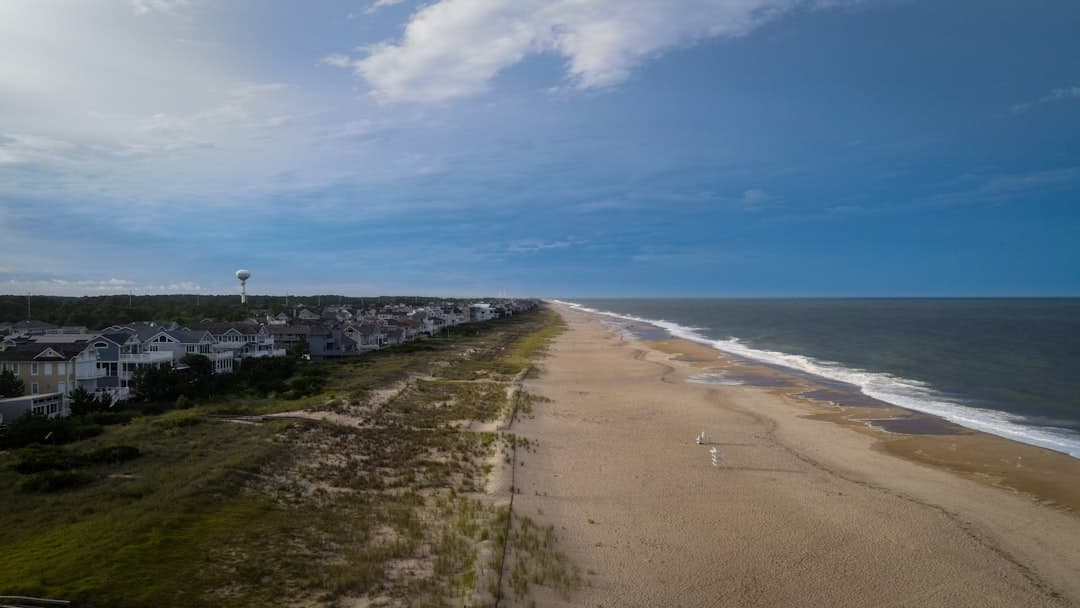
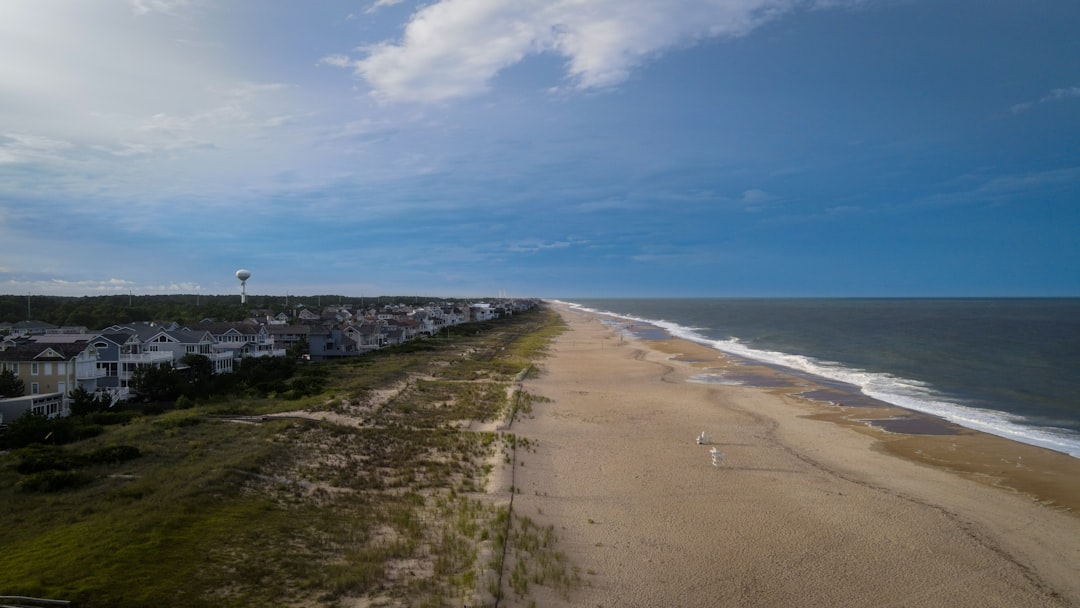
If you’re building in Sussex County beach markets (Lewes, Rehoboth, Bethany, Fenwick) or anywhere with flood exposure, the cost drivers stack up:
- Elevation & foundation requirements (pilings, piers, breakaway walls, flood vents)
- More structural hardware and detailing for wind uplift
- Stairs, decks, and exterior living (expensive square footage)
- Insurance-driven specs (roofing, openings, fastening schedules)
- Tighter staging and higher logistics costs in peak seasons
This is why coastal builds often feel like they “don’t follow the per-square-foot rules.” They do—it’s just that your plan contains more high-cost components per square foot.
Wondering what these ranges mean for your town? The free calculator above localizes them to your ZIP.
Get my Delaware estimate ↑The real cost is a stack of line items (and Delaware has its own pressure points)
A typical new build budget isn’t one number—it’s dozens of categories that expand or contract based on your decisions.
A Delaware-focused cost breakdown notes common percentage ranges like:
- Site work: ~3%–8% of overall cost
- Professional fees: ~8%–15%
- Foundation: ~10%–15%
- Framing: ~10%–20%
- Utilities (plumbing/electrical/HVAC): ~10%–15%
- Interior finishes & fixtures: ~25%–35%
(Source: Today’s Homeowner)
https://todayshomeowner.com/general/cost/how-much-does-it-cost-to-build-a-house-in-delaware/
Percentages are useful for sanity checks—but they’re not estimates. For example, “interior finishes” might mean:
- stock cabinets + laminate tops + fiberglass shower units (lower)
- semi-custom cabinets + quartz + tiled showers + upgraded trim (higher)
- fully custom millwork + designer lighting + stone + specialty appliances (highest)
Same category name. Totally different scope.
Labor in Delaware (2026): why “labor market” changes your total, even with the same materials
Labor is often the swing factor that homeowners underestimate because it doesn’t show up as a single line item. It’s embedded in framing, drywall, tile, painting, MEP, roofing—everything.
One public 2026 reference point for construction labor is the Davis-Bacon wage determination for Delaware (Residential, statewide), published Jan 2, 2026. It lists base rates for classifications like carpenter, electrician, and plumber (with some county differences), which helps illustrate that labor pricing is not uniform. (Source: SAM.gov Wage Determination DE20260001)
https://sam.gov/wage-determination/DE20260001/0
Examples from that 2026 wage determination (selected items; base rates shown in document):
- Carpenter: New Castle County $10.59/hr (plus fringes); Kent & Sussex $9.75/hr
- Electrician: Kent & Sussex $10.00/hr; New Castle $9.12/hr
- Plumber: New Castle $9.80/hr; Kent & Sussex $8.92/hr
Important context: these are prevailing wage determinations for covered work and are not the same as what you’ll pay a residential subcontractor on a private custom home. Your actual billed labor cost includes overhead, insurance, equipment, travel, supervision, scheduling, and profit. But it still demonstrates the key point: rates differ by county and classification, and labor is a major cost driver in every build category.
“I just want a ballpark.” Here’s why ballparks fail in Delaware
Most people start by asking, “How much for a 2,000 square foot house?” The problem is that square footage doesn’t capture the expensive variables:
1) Foundation type & moisture conditions
Delaware’s mix of coastal plain soils, high water tables in some areas, and stormwater requirements can change foundation scope.
Cost-impacting choices:
- slab-on-grade vs crawlspace vs full basement
- engineered fill, over-excavation, drainage improvements
- radon mitigation (common in parts of the Mid-Atlantic)
- flood elevation strategy (especially near the coast)
A foundation is not just concrete—it's excavation, drainage, waterproofing, insulation, termite treatment, and sometimes structural engineering.
2) Site work: the “it depends” category that can blow up budgets
Site work is where the largest surprises live:
- clearing/trees
- grading and erosion control
- driveway length and base prep
- rock, unsuitable soils, or dewatering
- septic and well (vs public utilities)
- bringing power/telecom to a long setback
A “cheap” lot can become expensive if it needs extensive prep—or if it’s far from utilities.
3) Home shape and roof complexity
Two houses at 2,400 sq. ft. can have very different exterior surface area:
- more corners, bump-outs, dormers = more framing labor + more flashing + more siding + more roof valleys
- taller wall heights and large spans can require engineered lumber and beams
Complexity increases labor hours, waste, and risk—builders price that in.
4) Finish level: the fastest way to move the total by six figures
Finishes are where budgets drift. Common “budget creep” items:
- flooring upgrades (LVP vs hardwood; tile in more rooms)
- cabinetry tier and layout complexity
- countertop material and thickness
- appliance packages and ventilation
- plumbing fixtures (valves, trim kits, freestanding tubs)
- window size and performance level
- lighting design and electrical scope (recessed lights add up fast)
A helpful way to think about it: finish choices don’t just add material cost—they add labor cost (tile installation, custom trim, cabinet install complexity, specialty electrical).
5) Code and performance requirements (energy, wind, and water management)
Even when you’re not on the coast, modern energy codes and best practices push costs:
- higher insulation targets and air-sealing details
- better windows/doors
- HVAC sizing and duct design
- ventilation and humidity control
On the coast, wind and flood-related design elements can add significant structural and detailing costs.
Permits, fees, and “soft costs” in Delaware: real money outside the framing package
Many homeowners only budget for “construction,” but major dollars sit outside the materials-and-labor scope:
-
Building permits: One Delaware cost breakdown notes permit costs can be significant and suggests budgeting at least ~$5,000 for a ~$250,000 home (example-level estimate; varies by jurisdiction). (Source: Today’s Homeowner)
https://todayshomeowner.com/general/cost/how-much-does-it-cost-to-build-a-house-in-delaware/ -
Professional fees: Architecture/engineering/surveying can run ~8%–15% depending on scope, revisions, and complexity. (Source: Today’s Homeowner)
-
Financing costs: construction loan fees, interest carry, inspections/draw fees
-
Utilities & tap fees: depend heavily on provider and distance (and whether you’re extending services)
-
Landscaping & exterior improvements: A rule-of-thumb example is ~10% of construction cost for landscaping on some projects—often overlooked until the end. (Source: Today’s Homeowner)
These “soft costs” are why two people can both say, “I built a $500k house,” but one is talking about the contract amount and the other is talking about the all-in project cost.
Example budgets: why the same “2,000 sq. ft.” can land in different worlds
These simplified examples are illustrative 2026 estimates to show variability (not quotes):
Example A: 2,000 sq. ft. value-focused build (inland lot, simpler plan)
- Estimated build cost: $175–$250/sf
- Estimated total: $350,000–$500,000 (excluding land)
Common characteristics:
- slab or simple crawlspace
- basic roof lines
- standard fixtures and finishes
- minimal site complexity
Example B: 2,000 sq. ft. mid-range custom (more detail, higher allowances)
- Estimated build cost: $250–$375/sf
- Estimated total: $500,000–$750,000 (excluding land)
Common characteristics:
- upgraded cabinets and tops
- higher window package
- more lighting, tile, trim detail
- moderate site work and exterior upgrades
Example C: 2,000 sq. ft. coastal / elevated / high-end finish
- Estimated build cost: $375–$650+/sf
- Estimated total: $750,000–$1,300,000+ (excluding land)
Common characteristics:
- elevation/flood-driven foundation
- multiple decks/outdoor living
- higher structural and detailing requirements
- premium finishes and custom selections
Again: the point isn’t that your project will fall into one bucket—it’s that cost drivers stack and change the math quickly.
Key Takeaway: Delaware build costs are real—but they’re not “one number”
In 2026, it’s reasonable to see Delaware build estimates ranging from roughly $163 to $654 per square foot, with meaningful variation by city and by build level. (Source: Today’s Homeowner) The difference between a lower-cost and higher-cost outcome usually isn’t “getting ripped off”—it’s scope: site work, foundation strategy, plan complexity, and finishes.
If you want a budget you can actually trust, you need a line-item estimate tied to your specific house plan and your exact location—because that’s how builders and lenders evaluate the project.
Next step: see a real line-item cost report (free), then price your exact plan
If you’re still in the planning stage, the most helpful thing you can do is look at what a true, line-item construction estimate actually includes.
- Try a free demo report to preview the exact format, detail, and categories before you buy anything: Try a free demo report
When you’re ready to price your house plan for your Delaware build location, you can order your custom Cost To Build report (a detailed line-item estimate) for just $32.95: order your custom Cost To Build report
Costtobuildahouse.com has been providing cost-to-build reports for nearly 20 years—because accurate budgeting isn’t about guessing a statewide average. It’s about pricing the real scope, line by line, for the home you actually want to build.